
life

"What Did You Eat Today?"

“Hello,” said Ma, in her cheerful evening voice. It was 8.30 p.m. She was probably having dinner.

“Hi,” I said. “What are you up to?”

“I’m watching NDTV Good Times,” she said. I zoned out. There was talk about beaches, food or something that didn’t interest me. My television – which was a mute, stale discussion about rising communalism – was more interesting. I grunted to keep myself in the conversation.

“What did you eat?” she asked.

“Rotis, rice, raita, some paneer thing…” I said. I didn’t ask what she was eating; how did it matter anyway? I replied with the same words every time she asked me. And she asked me every day, sometimes twice a day.

“I visited Radha aunty today,” she said. I asked her how I was related to the lady. Ma said that she was my aunt in some convoluted way. I’m sure I’ve asked her the question before. I’m sure I’ll ask her again. The conversation went on for two more minutes. She asked, I answered. Then she said goodnight. I hung up.

“You talk to your parents every day?” said the voice from across the room.

“Worse,” I said. “Ma calls once. Dad calls once. At least. Sometimes, I talk thrice a day.”

“Ouch,” she said. She played with her phone. “What do you guys talk about?” she asked me.

“The usual. What we ate, what we did, who we met, are we going out, when are we coming home next, what’s on the news, how Modi’s Twitter profile is so active…”

She grinned. “I don’t know why parents love making such small conversation. I simply refuse to discuss such things.”

“What do you say?” I asked her.

“I dunno…” She got back to texting whoever she was texting. “We… have this understanding.”

“I just don’t pick up those calls,” said Joint, plonking himself in front of the tele. “See?” he said. Dad Calling. The phone vibrated for forty-five seconds and then fell silent.

“Doesn’t that feel horrible?” I asked him.

“They understand man. If you tell them, they’ll understand you’ve got stuff to do. Why would you want to have shallow talks with them?”

“We have shallow talks with everyone, no?” I asked, turning towards her.

They threw me blank stares, almost as if they expected me to erupt with laughter and tell them I had them for a moment. They shook their heads – no.

“If your girlfriend wants to tell you what she is learning to cook, what will you do? Hang up on her?”

“It’s slightly harder there,” he said. “You need to feign attention. Continue with your stuff.”

“What do you actually like talking about then? What is important in this world?”

“Physics, genetic science, economics…”

“Why… Philosophy, mobile technology, politics, energy!”

“They make our world man… These are pointless trivialities we bother ourselves with. They just expand to occupy our time.” He then turned up the volume of the television, and we returned to our own mobile devices.

My eyelids were closing. I should go to the bedroom, I thought. “I’m gonna crash. Good night,” I said.

“Good night.”

“’Night…”

The irony of the situation rushed into my head; as I walked to my room, with my laptop cradled in my arms, my eyelids stopped feeling heavy. I smiled and continued my walk into the bedroom.

We drown ourselves in innocent conversations without life-changing implications all the time. We time our lives with clocks, we go to the gym, we eat dinner together, we build routines, we laugh at stupid things, we kiss and forget about it, we read books, we wish each other goodnight, we ask our loved ones what they had for dinner.

It is only necessary in this overpowering void. In the beginning, there was only emptiness. A human being was cast into this vacuum and told, “Make what you want of it!”

Voids can be intimidating. Imagine you are in space. There is nothing around you. You are floating; there is nothing to anchor you. Your feet are useless. You are spinning, faster and faster. You cannot control it. There is nothing to grab, there is no air, no sound, nothing. You are just a mass of flesh, alone without meaning, without purpose, without anything to hold on to.

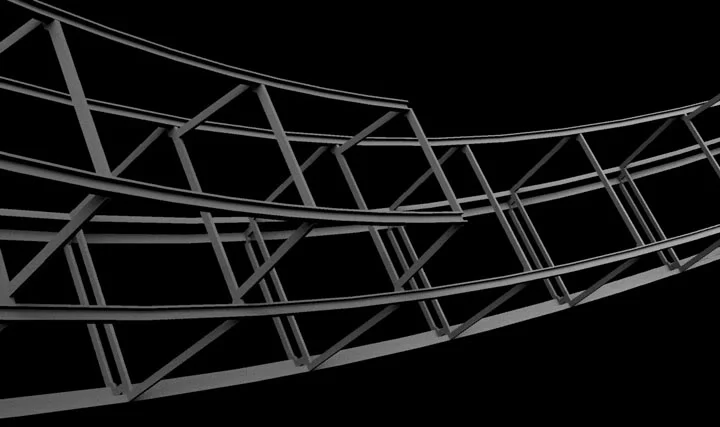
So humans began developing society, and complex systems to act as girders and beams. We developed chemistry and math, mythology and music, wars and painting. These can be seen as a gigantic framework protruding into space, attempting to spread into this supermassive black-hole. But that is as much as they ever will be – a framework.

In order to make them useful – in order to endure this void and perhaps live in it – humans must find ways to use this skeleton made of science, values, art and all cumulative knowledge to access the world. While we access the universe, we populate this minimal framework with habits, fleeting actions, whimsical decisions, words and thoughts that mean nothing. These help us fill the world and make it bearable.
The worlds of science and music and fantasy exist only so that you can carry on with your meaningless telephone conversations. Remember that. Pick up that phone-call. Talk.

"Good night!"
Value of Human Death

I attended a safety meeting last week, to discuss operational hassles and reduction of health and safety risks. My presentation had two slides, mostly about minor spills and awareness about personal protective equipment (PPE). As I was the last presenter, I waited for my turn in the corner of the room, quietly sipping my Tetley dip-chai. The slides moved on.

I was being lulled to sleep by the quiet monotonous affair, when the slide switched again. The title of the slide: FATALITY

In black and white, with a few pictures and aerial maps, the grim incident unfolded before my eyes. There was a tractor, probably faulty, almost certainly devoid of critical maintenance, which had rolled over and fallen off the side of the road. As it was past sunset on a relatively unused road, response wasn't immediate. The driver of the vehicle, a poor man wearing a colourful turban, might have removed his seat-belt at the time of incident.

"The Injured Person or I.P. did not comply with policies," said the presenter. Without blinking, he explained the occurrence with an unwavering voice. "Since the previous accident, we have enforced strict driving rules. But compliance..."

The fact that a man had died grew upon me. A driver who I might have even seen on the road had suddenly ceased to exist. In front of me, people spoke of his death with academic interest. In the next slide, he appeared as a blip on a frequency chart and as a red block on a pyramid. The men accepted that their numbers didn't look pretty.

"He died," I said slowly to the man who sat next to me.
He looked at me and said, "Yes, they were better off last month."
"What do you mean?"
He pointed at the graph. No one had died in February. The other months had 1s, 2s and occasional 3s.

"Those are deaths?"
"Only the red ones."
"What about black? What's worse than red?" I asked, reading the colour-code.
"Oh, that's when many people die. Haven't had one in a long time."

The slides about the fatality had passed. They began to discuss an oil-spill. The man would remain as a point on a graph. And his family would get a six-figure sum as compensation.

* * * * * * * * * * * * * * * * * * * * * * * * * * * * * * * * * * * 

A farmer jumped off a tree at an AAP rally. Maybe he wasn't really a farmer, maybe he was a land-owner. He was, perhaps, rich. Maybe he wanted to contest elections as an AAP candidate. It could all have been staged.

But as the story goes, a man died in public view. No one could do much about it. And while there was temporary disruption in activity, nothing really changed. The show went on. The media arrived on the scene, and they have minted money off a corpse ever since.

If this had happened away from public view (and an AAP rally), Gajendra Singh would not be missed. There are have been nearly 3,00,000 farmer suicides in the country since 1995. Each one of these deaths could potentially bring a family to a stand-still. In a country of a billion, perhaps they don't matter?

On an average, 30-40 people have killed themselves per day. Some of these get reported, in the inside-pages of national dailies. Most of them don't get mentioned; they are unrecognized in life and in death.

                             * * * * * * * * * * * * * * * * * * * * * * * * * * * * * * * * * * * 

Did you know that 15-20 people are killed daily by Mumbai locals alone? 20 more people are maimed, crushed or left bruised and bleeding.

For every 1,00,000 vehicles on the road, nearly 210 people are killed on an annual basis. One person is killed for every 475 vehicles in this country. 2.5 lakh people are killed annually on Indian roads. Again, it is perhaps a small number and insignificant on an Excel sheet.

Nothing can be said about the accuracy of these figures, and statistics in developing nations are hardly reliable. In 2013, a medical research panel discovered that India was heavily under-reporting its Malaria fatalities. They found that the average number of deaths were in excess of 40,000 against a reported value of around 1,000.

We also report that around 6 children die out of every lakh simply because they don't get enough food. They die because there aren't enough grains of rice which enter their mouths, probably because they rot in remote godowns.

Each number represents the termination of as many human beings: humans who ought to be protected, nourished and allowed to grow in life, humans who should be mourned in death.

I still remember the boards on highways in the USA which sent shivers down my spine: "$100,000 FINE" (for hitting a pedestrian). Clearly, the value of life is vastly different in different parts of the globe. The Indian citizen isn't worth much. A poor Indian is worth nothing.

What are you worth?

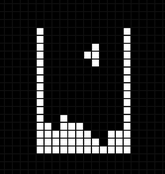
Difference Between Life and Tetris

There is none.

We all theorize. Every time you stare into the ocean, or at the moon, or at the caramel sands in the blazing desert, you begin pondering about life, its meaning and therefore about its futility. The greatness of the view makes you feel like a rather insignificant speck in the grand scheme of things, and thus initiates such a thought-process which, quite obviously, has no meaningful end. But we dutifully go through this painful realization every time we sit alone in front of nature's magnificent might. And every time, we have a new theory about life.

My theory begins with Tetris. It all began three days ago when I was playing the wonderful game, resplendent in black and white. That was when it first struck me how similar it was to life itself! Blocks of different shapes and sizes were raining upon me with the spontaneity of the immense drops in a thunderstorm. They fell with such randomness that they were entirely indistinguishable from the stochastic events - opportunities and worries - that Life throws at us. You can't obviate or avoid them; you can only arrange them, try to absorb them.

As the 'Z's, the 'L's and the 'I's fell upon me, I could but divert them towards the different corners of the little screen I looked at, with the hope of achieving something spectacular - an order in a chaotic universe, which would be so beautiful that I couldn't ever take my eyes off it.


The 'Z's snuggled cozily with the 'L's, even as the spectacular 'Is's occupied those elusive voids which have always been left incomplete. And then I saw the beautiful pattern being completed. There were no voids. No spaces. No white places which required reason. The completed pattern imprinted itself in my mind in a way, I knew, I could never be freed of the haunting memory. The thought of the pattern gives me goosebumps even now - when I'm almost entirely sure that I will never again be able to replicate such splendor. Magnificent in its magic, Life is. Much like Tetris.

And then, I witnessed the greatest climax ever possible when the pattern satiated itself and collapsed. It disappeared! And it left no trace. The experience was complete, and now it was absent. It was but a memory, and therefore it was perfect. Experiences, after all, are only as perfect as the memories they are capable of creating. And it was apparent to me that day. There are no goals in life. There are never any! There are only roads which we imagine are ways to a destination. But ever so often, these roads are so romantic themselves, that you must forget the destination! Just like Tetris.

Rules of Tetris: When you make a perfect line, it disappears and all the blocks shift accordingly, leaving only a void on your screen. If you let the blocks reach the top of the Tetris board, you lose. You cannot win a Tetris game, though you can attempt to get the high score.

The point of Life isn't to reach the top, is it? The objective is to make patterns more beautiful than you can imagine, until they complete themselves and remain only as memories - memories that you want to relive. But sometimes, they come back! And we all wish that, one day, we will have the opportunity to recreate those spectacular designs.

It's the same thing with Tetris. You can't win Tetris; you only get to make a high-score. A score so high no one else can match!