Meaning

Help in the Time of Rainfall

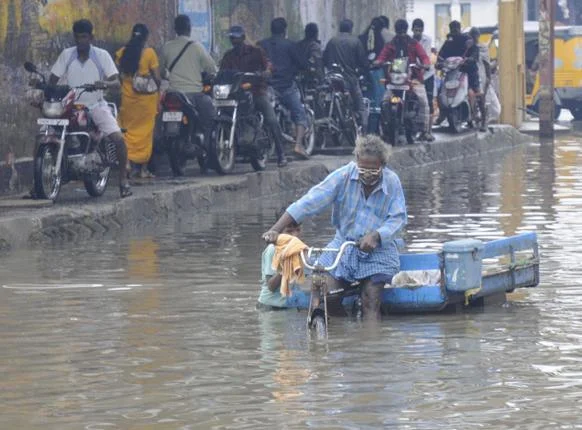
Raindrops, little bullets that explode upon impact, fell upon the city, turning every trough in the road into a bucket. Low-lying homes were flooded. People were on terraces, hailing boats, choppers and their able-bodied neighbours. Their food supply was affected. They had no access to water.

I had no access to the internet. I didn’t know how long my inverter would work. I used my mother’s internet ration to connect with people I consider friends. I also connected with strangers on the internet, united by a wave of empathy and concern. The internet is a beautiful place to call out for help, and to offer assistance.

The rains didn’t cause floods near my house. They created immense pools of stagnant water at street corners, just high enough to drown the car-exhaust and ensure the audacious driver floated to a halt in the middle of the road. As calamities go, this was highly unspectacular. The rains, however, disabled the power station, telecommunication towers and shops in general: there was little tap-water (water was still available from wells and hand-pumps), electricity and internet. So the rains that weren’t life-threatening by any standard became a mirror in which people were confronted by their dissatisfied first-world images.

It was a frustrating evening. I was feeling bored, unproductive and particularly useless. As I was craving for internet-access, I took control of my mother’s phone – the only one which could connect to the web. Turning to Twitter, mistaking it for panacea, I said within 140 characters – “Anyone in Adyar/Besant Nagar who wants help – food, shelter, assistance – call me at 24912062 #chennairains”. As a mode to find purpose in life, the internet offers instant gratification: I was retweeted several times, and my chest swelled with pride and satisfaction.

Ten minutes later, I recognized the futility of my action as the BSNL line was dead. As my tweet was winning over the world, I was cut off from everyone else in the darkness of my bedroom. I was left feeling humiliated and bored. Certain that I didn’t have a shot at both triumph and suffering, I felt a familiar lurch: I should do something.

So I took the scooter keys, unlocked the vehicle and sped out in the mild drizzle. My head was swelling with goodness, and the possibility of noble actions that could help several families. This gladiatorial sensation lasted until I reached the gate, where the watchman asked me, “Where are you going?”

Floundering for an answer, as I clearly didn’t know where I was going, I explained to him: “Udhavi seiya poren.” (I am going to help.)

“Yaaruku udhavi?” (Help whom?)

Like the Sun News reporter, I said with conviction: “Baadhikka patta makkalukku.” (The afflicted masses.)

Naturally, my watchman was stunned by my insipid reasoning, although, I am certain, he didn’t have an idea about the troubles in my mind. He followed up with a kind face one normally reserves for children and victims: “Where are the afflicted masses?”

“I was hoping you will tell me,” I said. “Where are the people who are suffering? I will go by the Adyar river. I am sure people are suffering there.”

“No, no,” he said. “You don’t know anything. People have been rescued near the Adyar river. They are all safe. You cannot help anyone if you go there.”

“Then where must I go?” I said, perturbed.

“You must go to Saidapet, or Kotturpuram. I hear there is severe flooding there. Water is very deep. And they don’t have food.”

“So I will go to Kotturpuram!”

He studied me for a moment, and adjusted his umbrella. “How will you go there?” he asked. I revved up the vehicle in response. My headlights were on; I was ready.

He pointed at the road and said: “When you take a left here, and go 200 metres, you will find that the road is flooded. Two feet water. Your scooter will not go.”

As rain streaked down my glasses, my heart still throbbed with determination. My desire to help was, however, logistically challenged. How will I go? I didn’t want to lose the scooter in a    puddle. And I still didn’t know how to help people.

“Can I not help people then?” I asked the watchman.

“I’m sorry, sir,” he said. “You cannot. Please go back home.”

You Only Live Once

If you stand ground when high-meanings around you

Are talking of the good and the evil that men do;

If you trust nothing, not even the men about you

And know that they, too, are doubting you;

If you get out there, without tarrying or waiting,

Or know the art of deceit, while detecting lies

Or know that loving is pointless, as is hating,

That here and now is just a throw of dice:


If you can dream – and achieve your dreams faster

Than friends and colleagues who have a similar aim;

If you love your hair-gel, lipstick or plaster,

And see them as tools to up your game;

If your actions don’t depend on words you’ve spoken

If men, to you, are breathing flesh and tools:

Tools that build, tools that sometimes are broken,

Tools that are replaced by similar fools:


If you make a heap of all your morals

And burn it in a massive, consuming flame,

And begin to trade in anything that sells,

And laugh at rules, and all things tame;

If you enjoy yourself, and always stay new,

And learn to live in society, alone,

And talk of freedom – what it means to you

Without making yourself to meanings, prone;


If you lead crowds with words of empty humour,

Or flatter kings, with your music and touch,

If neither foes nor loving friends matter,

If you let go saying, “This is all too much”;

If you can fill life’s every minute,

With proud memories of mistakes done,

Yours is everything, because nothing is in it,

And remember—you only live once, my son!


"What Did You Eat Today?"

“Hello,” said Ma, in her cheerful evening voice. It was 8.30 p.m. She was probably having dinner.

“Hi,” I said. “What are you up to?”

“I’m watching NDTV Good Times,” she said. I zoned out. There was talk about beaches, food or something that didn’t interest me. My television – which was a mute, stale discussion about rising communalism – was more interesting. I grunted to keep myself in the conversation.

“What did you eat?” she asked.

“Rotis, rice, raita, some paneer thing…” I said. I didn’t ask what she was eating; how did it matter anyway? I replied with the same words every time she asked me. And she asked me every day, sometimes twice a day.

“I visited Radha aunty today,” she said. I asked her how I was related to the lady. Ma said that she was my aunt in some convoluted way. I’m sure I’ve asked her the question before. I’m sure I’ll ask her again. The conversation went on for two more minutes. She asked, I answered. Then she said goodnight. I hung up.

“You talk to your parents every day?” said the voice from across the room.

“Worse,” I said. “Ma calls once. Dad calls once. At least. Sometimes, I talk thrice a day.”

“Ouch,” she said. She played with her phone. “What do you guys talk about?” she asked me.

“The usual. What we ate, what we did, who we met, are we going out, when are we coming home next, what’s on the news, how Modi’s Twitter profile is so active…”

She grinned. “I don’t know why parents love making such small conversation. I simply refuse to discuss such things.”

“What do you say?” I asked her.

“I dunno…” She got back to texting whoever she was texting. “We… have this understanding.”

“I just don’t pick up those calls,” said Joint, plonking himself in front of the tele. “See?” he said. Dad Calling. The phone vibrated for forty-five seconds and then fell silent.

“Doesn’t that feel horrible?” I asked him.

“They understand man. If you tell them, they’ll understand you’ve got stuff to do. Why would you want to have shallow talks with them?”

“We have shallow talks with everyone, no?” I asked, turning towards her.

They threw me blank stares, almost as if they expected me to erupt with laughter and tell them I had them for a moment. They shook their heads – no.

“If your girlfriend wants to tell you what she is learning to cook, what will you do? Hang up on her?”

“It’s slightly harder there,” he said. “You need to feign attention. Continue with your stuff.”

“What do you actually like talking about then? What is important in this world?”

“Physics, genetic science, economics…”

“Why… Philosophy, mobile technology, politics, energy!”

“They make our world man… These are pointless trivialities we bother ourselves with. They just expand to occupy our time.” He then turned up the volume of the television, and we returned to our own mobile devices.

My eyelids were closing. I should go to the bedroom, I thought. “I’m gonna crash. Good night,” I said.

“Good night.”

“’Night…”

The irony of the situation rushed into my head; as I walked to my room, with my laptop cradled in my arms, my eyelids stopped feeling heavy. I smiled and continued my walk into the bedroom.

We drown ourselves in innocent conversations without life-changing implications all the time. We time our lives with clocks, we go to the gym, we eat dinner together, we build routines, we laugh at stupid things, we kiss and forget about it, we read books, we wish each other goodnight, we ask our loved ones what they had for dinner.

It is only necessary in this overpowering void. In the beginning, there was only emptiness. A human being was cast into this vacuum and told, “Make what you want of it!”

Voids can be intimidating. Imagine you are in space. There is nothing around you. You are floating; there is nothing to anchor you. Your feet are useless. You are spinning, faster and faster. You cannot control it. There is nothing to grab, there is no air, no sound, nothing. You are just a mass of flesh, alone without meaning, without purpose, without anything to hold on to.

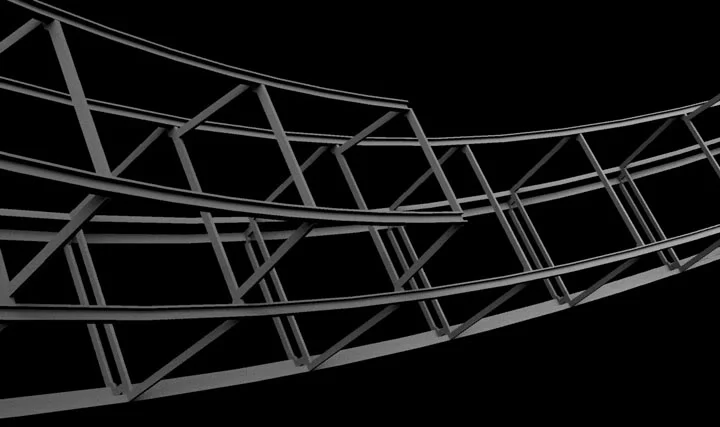
So humans began developing society, and complex systems to act as girders and beams. We developed chemistry and math, mythology and music, wars and painting. These can be seen as a gigantic framework protruding into space, attempting to spread into this supermassive black-hole. But that is as much as they ever will be – a framework.

In order to make them useful – in order to endure this void and perhaps live in it – humans must find ways to use this skeleton made of science, values, art and all cumulative knowledge to access the world. While we access the universe, we populate this minimal framework with habits, fleeting actions, whimsical decisions, words and thoughts that mean nothing. These help us fill the world and make it bearable.

The worlds of science and music and fantasy exist only so that you can carry on with your meaningless telephone conversations. Remember that. Pick up that phone-call. Talk.

"Good night!"