
India

Entrepreneurship #1: "You Are Now Free"

Like the average Indian, I too am built to endure. I am always crouching, in the ‘get set’ position, staring at a distant finish line, waiting for the gun to go bang. I always thought I was designed to function when the rules of the game are known, and the racetrack is clearly marked. Without those essential lines of chalk, I thought I might wander, dissipate and never come back.

Engineering was a godsend. Not only did I love science more than anything else in the world, I didn’t know about too many other things. The race was there to be run. I ran the damn thing. I suppose I won.

Events and tasks have always lined up before me, as obvious paths, as challenges, as examinations, as results of random probability… Some tasks have been easy, others have been difficult; a few, I don’t even recall. But my mind used to perceive the universe as a constant source of inputs to which I, the dramatic protagonist, had to respond.

Let me explain this more clearly. When I am subjected to a tight, restrictive framework, I will accept and understand the rules before proceeding to derive the maximum possible benefit from this environment. But I will constantly fall back on a story about rebellion - rebellion against the system, a fight against oppression. Struggle, therefore, becomes a crutch. Like many other people, I thrive in a hostile habitat that creates sufficient trouble to keep its people occupied.

The world of young entrepreneurs is different. As a first-time entrepreneur, most people are confronted with the delusion of control. In the start-up world, where “I work for myself”, there is a strange idea that the entrepreneur is not the response, but the stimulus. As there is no existing race to be won, a brand new race is created – first in the mind and then in the physical world. In a strange way, I now feel like I am the racetrack, the finish line, the runner and the gun.

This is obviously a stupid notion. But it is also an energizing belief. In some ways, the entrepreneur is a child. In this world, there are no rules; there is freedom, and nothing else. But what is freedom in the absence of its boundaries? Such ‘pure’ freedom creates a world where the story of struggle can no longer be an effective crutch. It creates a delusional place where you can become anyone.

In the past few months, I have passed through a mirror. Everything here is fresh and laterally inverted.
Is India Hindu or Muslim?

Kumbalgarh, Rajasthan: This proud legacy of the Mewar Rajputs - once the stronghold of Maharana Pratap - earned its fame through conflict. The evil Mughal emperor attacked; the noble king defended his people from destruction. Rana Pratap protected his women and children from loot and rape. He perished in the course of this great struggle, but not before enshrining himself forever in Indian folklore.

Srinagar, Kashmir: Here, there is a majestic fort atop a lone hill popularly known as Hari Parbat. According to legend, the mountain is an oversized pebble which was thrown by Goddess Shakti to slay a demon who terrorised the people. Or so the Hindus tell you. According to the Muslims, there is no Hari Parbat; there is only Koh-e-Maran, and a fort that Akbar built.

Patna, Bihar: As India took on Pakistan in a high-octane clash in the 2011 World Cup - the match was happening in Mohali - an entire mohalla was draped in green with Pakistani crescents. People cheered when Sachin fell; they prayed for Misbah to take them home. Neither of those things happened. India won that game.

Ayodhya, Uttar Pradesh: People from all around the country were mobilised with minimal effort to destroy a historic mosque in Ram Janmabhoomi, so that Ram's empire of dharma could be reestablished. Thousands died; the place - even after being split in three parts - remains in dispute.

UNITY IN DIVERSITY

A man was killed for eating beef. The matter has been thoroughly minced by the Media. "India has become intolerant" under Narendra Modi, they say. News articles proclaim that saffron terror is on the rise. "We are a culture of diversity and debate" is our fall-back line. When all else fails, we will repeat this line, like a broken tape recorder, and hope to feel better.

It is untrue that our country is proud of its unity in diversity. That is a line written for fifth grade Social Sciences textbooks. We are a country of peace, but we don't know what diversity means. Since we didn't have to understand diversity all these years, it did not matter. We all lived in our comfortable little niches, interacting with people similar to us, never venturing too far from home.

Diversity necessitates the existence of dissent. One cannot be different if expected to conform to a majority; there will always be a majority, no matter how small the sample-space. There are as many Indias as there are stories in our country. Each narrative gives us a different picture, and each of these is as true (or as false) as the other.

Can Maharana Pratap be elevated to his Godlike status without vilifying the Mughals? Can we simultaneously celebrate Chhatrapati Shivaji and Aurangzeb? How can Ramjanmabhoomi coexist with Babri Masjid, when they debatably occupy the same spatial coordinates? We are often forced to choose narratives, and therefore forced to choose a particular India.

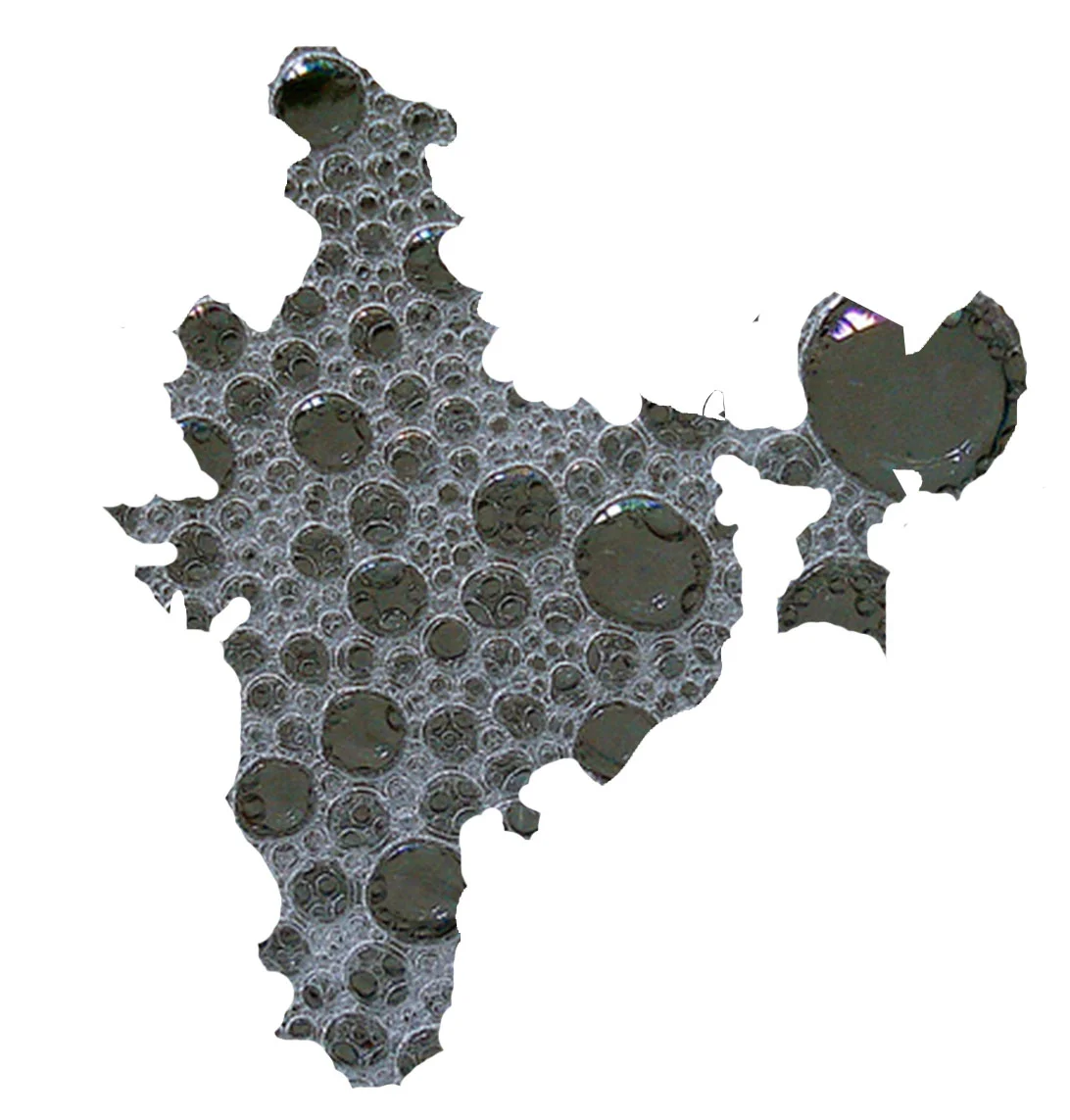
INDIA IS LIKE BUBBLES

We were, until recently, invisible to each other. We all had our little comfortable bubble, which encompassed our world. Everything we needed was within. Faced with globalisation - national integration is a small step in the grander scheme - we are forced to look outside our bubbles.

Of course, it doesn't please us. If it pleased us, we'd have ventured out a long time ago. Over time, some bubbles will coalesce and become super-bubbles. Super-bubbles will throw their weight around, for a while, until there are many such super-bubbles.

Ultimately, there is only one bubble, and that is the world. In my vision of such a mega-super-bubble, it is a place where people thrive on dissimilarities. Our ideas of liberals and conservatives are far too narrow to enter such a world. But I think we will get there.

Citations:

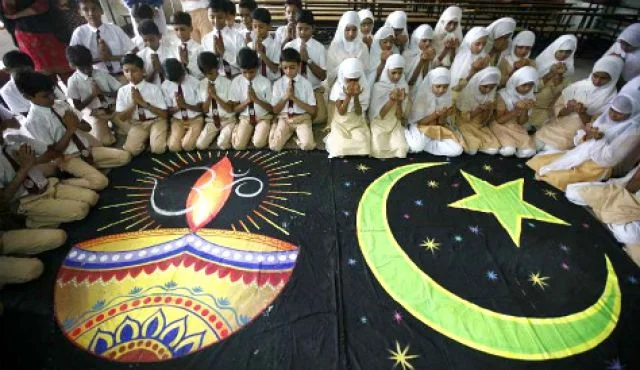
Picture of children praying for peace between Hindus and Muslims in India "http://www.haaretz.com/"

The Booty Call

He stood at the bottom of the stairs, looking down at his shoes. There was a familiar vibration in his left-pocket. She cannot wait, he thought, unable to contain his grin. Her message on Whatsapp had been urgent. She had demanded his presence at once. ‘There’s no one else at home.’

He kissed the Hanuman locket he wore around his neck, and prayed for strength. This was his big debut. He had to impress her. ‘Calm down,’ he said to himself, trying to forget that she was three years older than him – clearly more experienced. He put his right hand into his jeans-pocket, and felt the edge of the sachets inside. Three small soft packets, one behind the other.

He thought about the time they had kissed a few days ago. His first ever kiss, after all these years. He hadn’t told her, of course. She couldn’t know that she was about to be his first woman. He took a deep breath and started up the stairs, right foot first.

He then recalled the strangest thing – his conversation with Ramesh, back in sixth standard:

They went together to the toilet, back in those days, as it gave them an opportunity to walk around the large playground, watch the basketball game and stay away from the classroom for a while longer. One evening, standing in front of the urinal, shaking off the last drops, Ramesh told him the strangest thing – “I went to the girls’ bathroom yesterday.”

“Oh. And? Nobody saw you?”

“It was empty,” Ramesh said. “Nobody was there. So I quickly went and looked.”

“What did you see inside?”

“No place to piss!”

He laughed at Ramesh’s stupidity. “They don’t stand and piss,” he told his friend. “Haven’t you seen any girls without their clothes? Haven’t you observed animals?!”

Ramesh said that he hadn’t. “The chapter they skipped is for people like you,” he said, annoyed. Then he told his friend everything he knew.

He was halfway up the stairs now. He pulled out his phone and unlocked it. The message read – ‘The door is unlocked. Push, and you are in.’ He jumped up the last three steps. Then he stopped and checked his phone again. He closed the browser tabs quickly, awkwardly the last two times. He then realized that everything he knew about intercourse was through pornography.

He was amused by the thought. Will it really be like that, he wondered. He closed the Wikipedia page on ‘Safe Sex’. Then straightening his shirt, he pushed at the door.