Freedom

The Nature of Our Reality

1 + 1 = 2. 2 * 3 = 6. The Sun rises in the East. Water Molecules are made up of Oxygen and Hydrogen atoms. Science and Math consist mainly of definitive, precise, objective assertions, validated by logic and experimentation. 1 + 1 cannot, in someone's perspective, become 3. And Water Molecules cannot have Helium Atoms in another part of the Universe.

As an engineer, my Universe too, was therefore precise, well-defined and logical, with quantified, measurable truths. Yes or No were the acceptable answers to any question. Just as computing today doesn't require nuanced understanding of digital signals - the signal exists or it doesn't - the world didn't require nuanced understanding and analysis of emotions, body-language, non-verbal signals, positioning, subtle cues and localized mores.

Reality has come a long way since then. I currently am fascinated by the blacks and whites, by the 0s and 1s, by the Yesses and Nos of days-bygone, and I long for their simplicity and logic. While Yes and No simply mark two ends of a broad spectrum of pretty much everything, human language has evolved over the centuries to refer to the infinite possibilities in between.

I imagine that if we were a logical species, two gestures, noises or standard signals would suffice to cover the entire gamut of human communication. Perhaps a high-pitched grunt for a 1 and a low pitched grunt for a 0. We have, however, decided that definitions are limitations. Therefore, we shan't define as long as it isn't absolutely necessary. Ambiguity is the soul of freedom.

The ridiculous world we conjure for ourselves in the process has so many interpretations, it ceases to amuse us. In mathematical parlance, our nuanced freedom-of-opinion entitles us to opinions that aren't simply 0 and 1, but 0.1, 0.2, 0.3 ... 0.9, 1.0. Soon, that won't suffice as there would be sufficient differentiation created between the 0.2s and 0.3s, that it would require the creation of 0.23s, 0.25s and 0.27s.

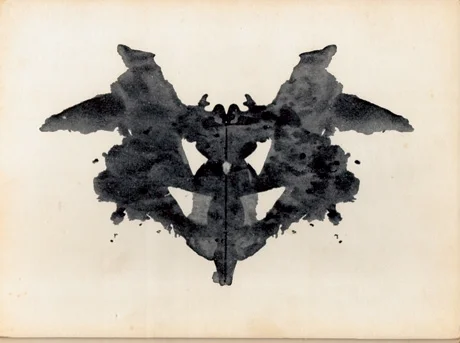
But it doesn't stop there. So far, it has been easy. Our pursuit of individuality and freedom soon results in the statement: "What does the spectrum even mean?" The spectrum is, after all, just a super-set of all possible responses to a question that is posed to humanity as a whole. But there is one problem: the spectrum can only be defined when the question posed is understood as the same by all in question. If the question can be interpreted differently by N different beings, this would result in N potentially different spectra as potential responses to the question.

And therefore, the ineffectiveness of communication. If we cannot establish a premise, how can we begin a dialogue. Your understanding of God, Religion, Science, Law, Discipline, Freedom, War, Honour, Pride, Wealth and Love are all different from mine. It's astounding that we manage to talk the amount we do.

Or maybe, we're just hedonistic creations dissipating energy by exercising our jaws to produce sounds to no particular effect.
Unedited Notes #1: Conscience (29.1.2016)

Promise me you won't laugh. Don't pity me either. I don't want your ridicule or sympathy. This is a public diary entry, mostly because I don't maintain a diary. I also write this here, I admit, because I want this to turn up when people search for Unhappiness, Depression and First World Gloom.

We all view life as a long, uncertain story, that progresses through time. Something like a YouTube video - only here, you can't skip forward. The only difference between life and the YouTube video is this: in life, you are inside the video.

So you are being conditioned by the story until now, which in turn influences how you perceive future occurrences. From an engineering perspective, perception is a function of time. And this perception usually shapes your future actions, which in turn changes your story and thereby your future perception of reality.

It's fucked up. You exercise even lesser control over your existence than you think you do. And what you can control most, and what you feel most helpless about, is this: how you perceive things. Because you're going to see many crappy things.

In fact, humans always reach a stage (in the twenties, or if you're having a really crappy life, in teenage) when they think anything that isn't horrible is actually nice. If a door is held open, or if someone tells you that you dropped your boarding-pass, or if a random stranger smiles at you, or if a car stops to let you cross the road. Human beings have the amazing ability to lower their expectations until normalcy seems like heaven. That, of course, is the trick to stay happy.

But if you're like me, you won't do that. I shan't lower my bar just because I've seen my share of idiots. I live in the hope that people will, one day, stop being so hopelessly irresponsible. I put my faith in that Justice Clock, high up in the sky, beyond my range of vision.

In a strange way, I'm fighting what the world is telling me: "Hey, I'm really shitty! No, seriously dude. There's no redemption here. I will stay this bad, for ever and ever and ever... Ha ha ha." And like an idiot, I say to the world, "No, no. You're good. You just don't know it yet."

I do this because I think the individual can prevail only by holding on to certain beliefs. I actually think that there is some intrinsic virtue in existence. Let me ask you something: do you think conscience is a universal construct?

There are certain things I would never do, because I think they're shitty. For example, I'd never want to murder someone, or physically hurt them, or extort them, or betray their faith. When such things happen to me, I rationalize them. Rationalization is the easiest route to forgiveness.

But should there be forgiveness if there is no remorse? I mean - if someone tries to kill you, fails and then walks away, but never expresses remorse, is it reasonable to forgive that person? And does this forgiveness mean you've lowered the bar? Have you stopped expecting people to be better than they are?

Three Levels of Perception: How to become a Zen-master?

Do you remember how we first read books? Those hard-bound things of wonder, with fair, blonde princesses and square-chested knights who would slay dragons and breathe life into the damsel with a kiss… Do you remember Amar Chitra Katha, and the legends of kings and demigods? And then Enid Blyton and her Pixie folks, and later still, Harry Potter, Frodo Baggins, Hercule Poirot…

LEVEL ONE

I don’t know about you, but I read them the same way a devout would read the Bible or the Quran: as gospel. It was written; therefore, it had to be true. This is the first level of perception. When confronted with an experience, we begin by reacting to it, with the body, mind or some combination of the two.

In the first level, the experience itself is flawless. The book is comprehensive, the movie is complete, and the person you talk to is perfect. At this level, we are easily influenced by the permanence and immutability of the stimulus. When our parents said something to us, it had to be correct; it had to be good advice. When a history textbook said that Shivaji was good and Aurangzeb was bad, that had to be correct as well.

LEVEL TWO

Beyond this basic understanding of the world, we begin to question the experience itself. Maybe the book was flawed, or the movie had terrible plot-holes… Perhaps, the person giving us advice is as confused as us.

At this level of understanding, we begin punching holes into theories, books, people and everything that isn’t the Self. We realize that textbooks are flawed because of their own skewed viewpoints, we understand that people have their own vested interests, and that movie-scripts are often written by idiots. At this level, we begin trusting our own previous experiences and the cumulative derived wisdom from those.

We pitch our opinions against those of another. “I think that the eagle could have flown to Mordor and dropped the ring into the fires of Mount Doom”. “I think that Genesis is a bad idea, because I believe in the Big Bang, in evolution, and in scientifically proven concepts”. “I think what you did was really shitty”. Our teenage and early twenties are often about this level of understanding.

LEVEL THREE

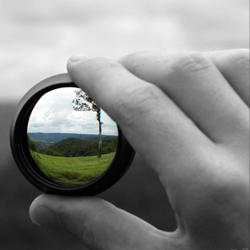
After we have spent enough energy fighting with the world, we wonder why we perceive the world in a particular way. What are these lenses through which we observe the world? How do we build our own personal rules?

With a third-person-insight into the prevailing conditions of the mind, we dissect not only why we act the way we act, but also why others act the way they do. In books, movies and works of art, we understand why we perceive a plot-hole where others (including the writer) possibly do not.

It is at this level that I think we are truly incapable of intense hatred or passion. If it can be explained, one can do away with a primal emotional reaction. We begin to see the code that governs this dysfunctional world, and keeps it stuck together in this precarious way.

At this stage, we are far less susceptible to intense life-changing moments. But we become Zen-masters, who can control the flow of water and the motion of the Moon. At this point of balance and peace, the will has a real shot at controlling our own actions.

Note: These levels of understanding are infinite: each subsequent level offers a unique, defining insight into the machinations of the world.