
Analysis

Three Levels of Perception: How to become a Zen-master?

Do you remember how we first read books? Those hard-bound things of wonder, with fair, blonde princesses and square-chested knights who would slay dragons and breathe life into the damsel with a kiss… Do you remember Amar Chitra Katha, and the legends of kings and demigods? And then Enid Blyton and her Pixie folks, and later still, Harry Potter, Frodo Baggins, Hercule Poirot…

LEVEL ONE

I don’t know about you, but I read them the same way a devout would read the Bible or the Quran: as gospel. It was written; therefore, it had to be true. This is the first level of perception. When confronted with an experience, we begin by reacting to it, with the body, mind or some combination of the two.

In the first level, the experience itself is flawless. The book is comprehensive, the movie is complete, and the person you talk to is perfect. At this level, we are easily influenced by the permanence and immutability of the stimulus. When our parents said something to us, it had to be correct; it had to be good advice. When a history textbook said that Shivaji was good and Aurangzeb was bad, that had to be correct as well.

LEVEL TWO

Beyond this basic understanding of the world, we begin to question the experience itself. Maybe the book was flawed, or the movie had terrible plot-holes… Perhaps, the person giving us advice is as confused as us.

At this level of understanding, we begin punching holes into theories, books, people and everything that isn’t the Self. We realize that textbooks are flawed because of their own skewed viewpoints, we understand that people have their own vested interests, and that movie-scripts are often written by idiots. At this level, we begin trusting our own previous experiences and the cumulative derived wisdom from those.

We pitch our opinions against those of another. “I think that the eagle could have flown to Mordor and dropped the ring into the fires of Mount Doom”. “I think that Genesis is a bad idea, because I believe in the Big Bang, in evolution, and in scientifically proven concepts”. “I think what you did was really shitty”. Our teenage and early twenties are often about this level of understanding.

LEVEL THREE

After we have spent enough energy fighting with the world, we wonder why we perceive the world in a particular way. What are these lenses through which we observe the world? How do we build our own personal rules?

With a third-person-insight into the prevailing conditions of the mind, we dissect not only why we act the way we act, but also why others act the way they do. In books, movies and works of art, we understand why we perceive a plot-hole where others (including the writer) possibly do not.

It is at this level that I think we are truly incapable of intense hatred or passion. If it can be explained, one can do away with a primal emotional reaction. We begin to see the code that governs this dysfunctional world, and keeps it stuck together in this precarious way.

At this stage, we are far less susceptible to intense life-changing moments. But we become Zen-masters, who can control the flow of water and the motion of the Moon. At this point of balance and peace, the will has a real shot at controlling our own actions.

Note: These levels of understanding are infinite: each subsequent level offers a unique, defining insight into the machinations of the world.
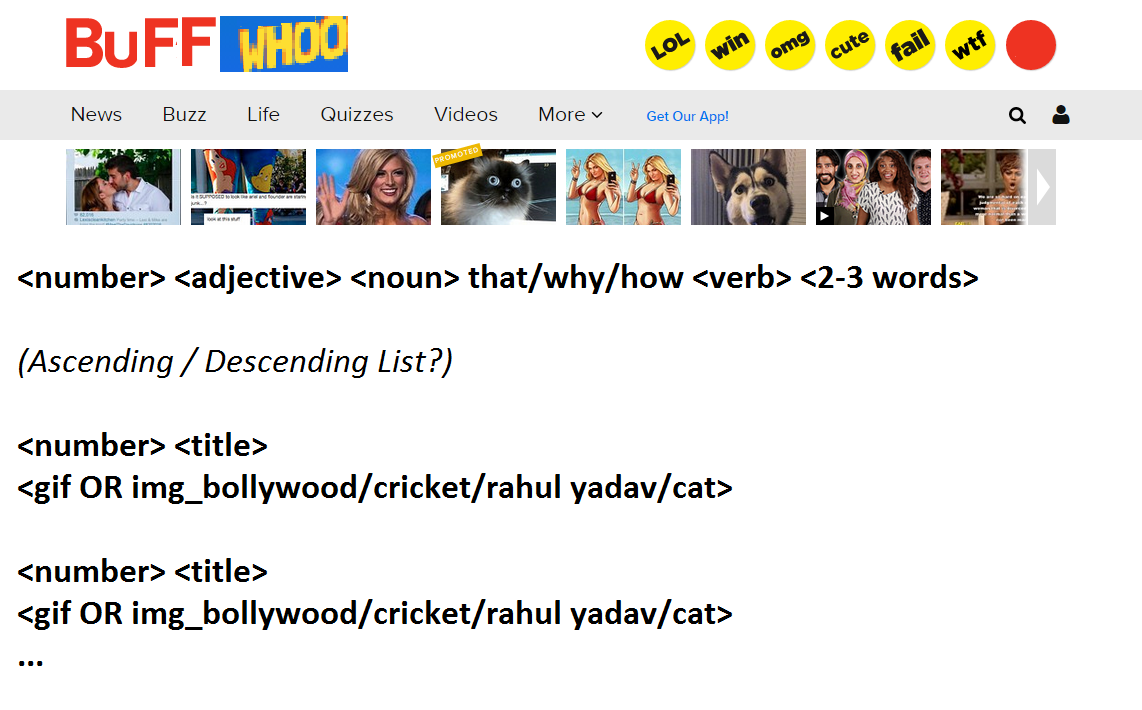

Five Awful Things You Didn’t Know About The News. Number Five Will Make You Share.

1.       Read. Copy. Share.

War room: She sat alongside the two most hated people on the team. Earphones plugged in, Tweetdeck open on the left, she powered through her newest article. Three years of experience radiated from her nimble fingers which went cluck-cluck-cluck against the QWERTY keyboard. She knew who wanted to hear what, how they wanted it packaged and why they would share it: 13 Things You Didn’t Know About ______’s Murder. Number Nine Will Make You Cry.

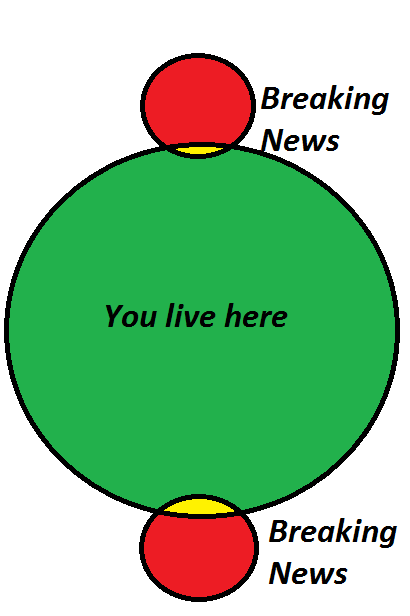
There were four old TVs, placed slightly apart, playing India’s three most popular English News Channels and the leading Hindi News Channel. Everything which aroused remote interest was playing in one of the channels before it quickly appeared on all four, and more significant news appeared as four independent sets of pulsating, red and yellow, creative “Breaking News” headlines – seven to ten words each.

Men and women in the room were tracking the news – Entertainment, Sports, Politics, Crime, Business – and jotting down the catchiest phrases. A quick search on the topic resulted in more results, and one or two phone-calls made them subject-matter experts. Two hours after first watching the news on Television, they would pen an independent article on the topic. Repackaged news made them superstars. Every day. Several times in a day.

Welcome to new age journalism: read, copy, share.

2.       Your Opinion versus My Opinion

If you have ever been to a friend’s place, a bar, a café, an office, university or school, or if you inadvertently walk on the road for too long, you will be asked – “What do you think about ____?”

Remember, it is important to have an opinion. You can agree or disagree, but you must take a stance, at least 0.01% to the right or left of center. Also, ignorance isn’t an option in our civilized world. When information is everywhere, only boors don’t know about trending movies, refugee-crises and cool cat videos.

If you think of news as a way towards developing your weltanschauung, you are in an obscure minority. Just like new-age startups dumped revenue for valuation, new-age media has dumped insight for virality. Opinions are in vogue and make for highly marketable content. Given our dependence on society for nourishment, it is likely that you and I field some militant, viral opinions as well.

Let’s drink beer and fight: your opinion versus my opinion.

3.       Gatekeepers Of News

We use Facebook every day. Consciously, sub-consciously, unconsciously, awake, asleep, in the bedroom, in the bathroom, in the car, in the plane (where there is no internet), while playing, while working, while eating, while…

Zuckerberg recently spoke about the billionth person on Facebook. In other words, one out of every seven people (with some error) across the world is on the social network. When a network is as ubiquitous as Facebook, it makes sense to fight for Facebook Neutrality – a concept similar to Net Neutrality. But Monopoly Laws haven’t evolved to cover the internet and social media.

Chancellor Zuckerberg’s blue empire is the gatekeeper of information. Today, it is impossible for companies and artists to spread information through their carefully cultivated Pages with lakhs of followers, without paying Facebook a fat commission. In order to be heard, you need to pay the gatekeepers of news.

4.       What’s Your Klout Score?

When posed the question in a Harvard Business School interview - “What do you want in life?”, my friend answered, “The same as everybody else: money, power and fame.” (Throw in a bit of love, and you’ve got life figured out.)

Major media houses are looking for people with celebrity status, achievements in popular fields or massive influence on social media. In a way, money automatically begets power and fame, fame generates money and power, and power leads to money and fame. Buy one, get two free.

In such an atmosphere, it is difficult to succeed without a head-start. If you have none of the three, but a potentially world-changing idea, no one will care.

Even the internet’s young content generating and propagating mechanism is ridden with nepotism, much like Bollywood – the bastion of news creation. The tech industry loves its own, and most apps – whether based out of Silicon Valley or Bangalore – have a tendency to lean towards a uniform techno-libertarianism. Such content is often repeated and reinforced, and therefore overrepresented on the platforms where we consume our news. Suddenly, you and I are skewed towards this niche opinion which appears to be the general worldview. It is a self-fulfilling prophecy.

If you are a cricketing-star who writes about love, a pornstar who writes about food, or a billionaire businessman who talks about pets, the industry wants you. There is only one question that matters: What’s your Klout score?

5.       Idiots in Pseudo-intellectual Hell

I came. I saw. I shared.

Social media diminishes the intellectual. The internet encourages radical viewpoints which are consistently and violently thrown at the masses with the intention of stirring joy, hatred, melancholy or another primal emotion. The general representative masses are forgotten as fortunes lie in the extremes of society – either in the vulgarities of the rich or in the miseries of the poor. The middle classes want novelty, and news channels happily quench this thirst.

Nice pictures - or better still, videos - have become essential tools in eliciting empathy and stirring our conscience. We can no longer live without this barrage of visual imagery, which we also help propagate.

The pseudo-intellectual is a wonderful consumer, because he/she thinks he/she is choosing to hold certain notions, blissfully unaware of the marketing genius which helps him/her feel that way. Then again, there is a higher pseudo-intellectual who understands this and quips "hey, what is free-will anyway?".

 But it is important to note that as long as we have our hands full - full of meaningless gibberish constantly thrown at us - we will never find the time to think. Hundreds of half-digested stories pass through our brains every day, and as long as this happens, we can never truly assimilate them. We will never know genius from lunacy or truth from the impostor. We will remain idiots in pseudo-intellectual hell.

Friday Release: The Trial

“BEFORE THE LAW stands a doorkeeper on guard. To this doorkeeper there comes a man from the country and prays for admittance to the Law. But the doorkeeper says that he cannot grant admittance at the moment. ”
— "Before the Law", Franz Kafka

Yesterday, a superstar was set free by a court. A judgement which took thirteen years to come was suspended in under 48 hours. Now, the wheels of the judiciary will turn firmly and slowly, as they always have. Judgement will come, but when it is of little consequence.

The intricate system of checks and balances, which upholds the law and order, may well be independent of public opinion, political whims and individual fancy, but it is also unaccountable and hopelessly slow. In the meanwhile, a wronged homeless family, which has lost its sole breadwinner, languishes on the streets with hope that is slowly but surely being extinguished.

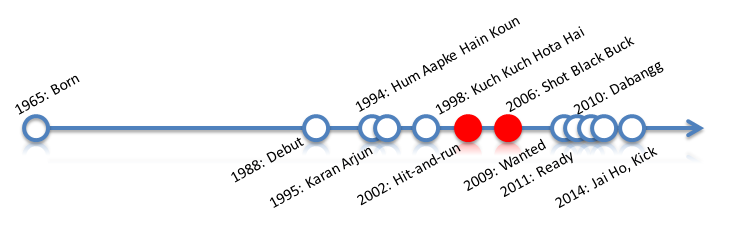
Below is a timeline which represents the farcical nature of judicial proceedings against Salman Khan. To put things in perspective, Salman Khan released over five films while the court was trying to finalize the charges against him. He went on to release blockbuster after blockbuster, while the police officer who turned witness against him died a painful, ignominious death.

While these pronouncements break down our belief in systems meant to protect us, we must try to retain perspective and view this as a case about a hit-and-run involving a man called Salman Khan, rather than a superstar by that name.

Given the nature of the incident and historical precedents, we must first probe how countries around the world fare in similar cases. "Benchmarking" is a crucial step in identifying the strengths and shortcomings of any system, including the judiciary.

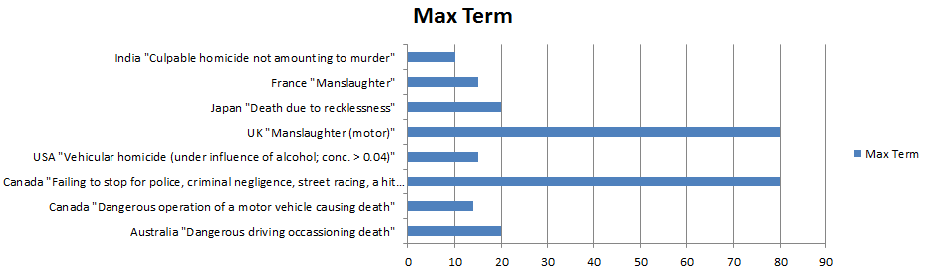
By evaluating the most common charges levied under similar circumstances in countries across the world - this is usually termed "Vehicular Manslaughter", "Motor Homicide", "Dangerous driving occasioning death" or (as in India) "Culpable homicide not amounting to murder" - we can qualitatively understand the nature of sentencing:

In terms of sentencing, it would seem that our books of law do not differ widely from worldwide standards. There are countries which are far more stringent with their laws, imposing sentences up to life imprisonment (e.g. Canada) in some circumstances, but there are a few with far less severe punishments for similar crimes.

It must however be noted that the swift justice is usually more important than an increase in possible sentencing. It does not make sense to give a life-term to a man in his seventies for a crime he committed in his forties. The arduous process of procuring justice in the country makes the judiciary something like a comedy-act.

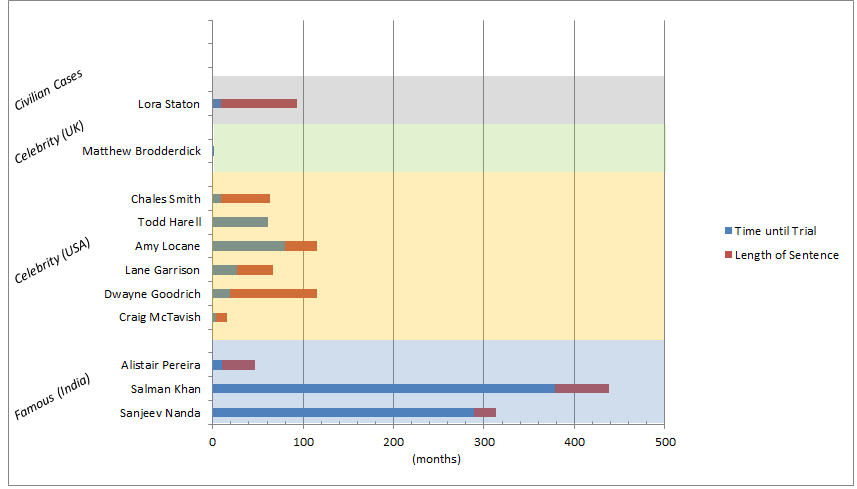
This is a comparison of the performances of various justice systems across the world in similar hit-and-run cases involving celebrities like actors, businessmen, NBA and NHL sports-stars, and relatives of the rich and powerful. While the term itself is varied, justice is served piping-hot in a way which makes slightly more sense than the great Indian comedy show.

Craig MacTavish and Charles Smith, who were NHL and NBA starts respectively, got their sentences in less than eight months. Matthew Brodderdick , the voice of adult Simba in Lion King, was dished out (a travesty of) justice in just about one month. In comparison, Sanjeev Nanda of the Delhi hit-and-run case was sentenced to two years imprisonment in 2008, ten years after his crime. He killed six persons including three police officers.

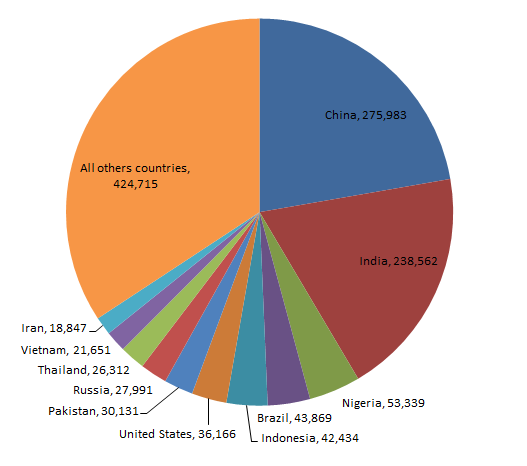
The rate at which vehicular death cases are registered (this doesn't cover cases which are not reported) amplifies these extreme shortcomings of the judiciary and the bodies involved in investigation. India contributes an alarming 19% of the world's total automotive fatalities, second only to China.

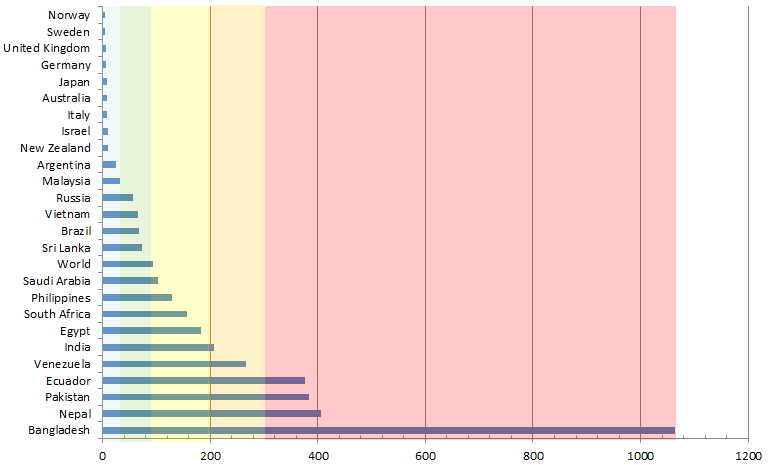
While the deaths are in proportion with the overall population of the countries, a more relevant statistic is the "Automotive Fatalities per 1,00,000 motor vehicles" - in which India has more than twice the world's average.

The weaknesses of the judiciary are showcased by the accelerated accident rate (of which a percentage is taken to court). Cases come in, pile up and collect dust upon the shelf, while few actually leave the court. Simultaneously, the kinks in our law-and-order system result in enhanced accident rates, thereby exacerbating the situation. In the absence of deterrent punishment, the value of safe-driving is often compromised. And there are more accidents.

Simple concepts of lane-discipline and obeying traffic lights are forgotten, overspeeding is hardly seen as an offence, and most people drive after taking one for the road. Only yesterday, I watched a group of drunk bachelors getting into the car discussing Salman Khan's case,  oblivious to the irony of the situation.

"Thappad se darr nahin lagta hai sa'ab. Car se lagta hai."

Quick and effective justice will be possible only when the judiciary, like most modern institutions, has metrics to measure efficiency, and specific and measurable targets to show constant improvement. In the absence of these, or with the poor enforcement of these, the men in black cloaks will remain an ineffective pool of mediocrity, and Salman Khan will make ten more blockbusters before his sentencing is enforced.

““Everyone strives to reach the Law,” says the man, “so how does it happen that for all these many years no one but myself has ever begged for admittance?”
The doorkeeper recognizes that the man has reached his end, and to let his failing senses catch the words, roars in his ear: “No one else could ever be admitted here, since this gate was made only for you. I am now going to shut it.””
— "Before the Law", Franz Kafka