Change

The Coward Who Sought Middle Ground

Once upon a time, there was a society which had normal problems. Its fault-lines were apparent, and they never went away; sometimes, people would grow apart, and at other times, they would come together. There were several divisions: rich and poor, educated and uneducated, forward caste and backward caste, employed and unemployed, male and female, capitalists and socialists.

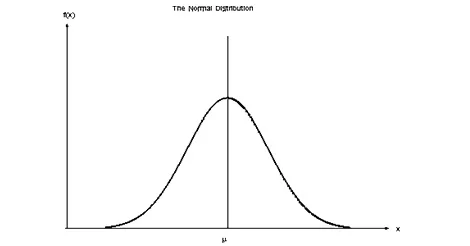
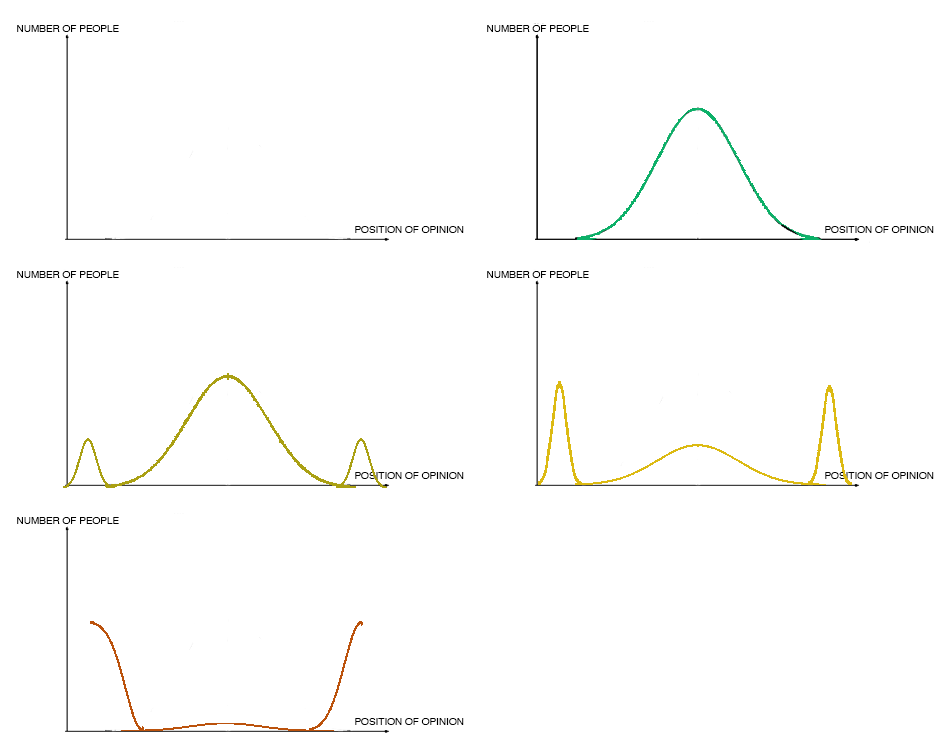
This society, like many others, was subject to empirical laws that governed most other realms. People carried a variety of opinions on every single issue, usually forming a spectrum. There were few people at the extremes - visionaries and lunatics - but a vast majority didn't hold such radical views. The distribution of their opinions on any particular topic (agreement-disagreement plotted on the X-axis) formed a typical bell-curve.

With the passage of time, and the advent of magazines and social media, these opinions became louder and larger in number. It then became possible to gain not only fame but also wealth through neatly phrased sentences, which mimicked an ideology. At this stage, the curve became "taller" (it grew in amplitude) but did not change its shape.

Soon, when the noise of opinions was deafening, it became important to stand apart from the crowd to be heard. Extreme positions, bordering on the illogical, were incentivised. Magazines were willing to pay for extreme rights and savage lefts. There was less interest in the middle; after all, it was mainstream.

So the distribution was changed.

More people were drawn away from the middle, towards the extremes. Soon, the convergence of opinions - a consensus - was no longer an outcome of discussion; it was an anomaly. The bell curve was ripped apart, and the extremes grew in power. People in the middle were now left without support.

When such blocks of opinions were formed, with seemingly no angle of reconciliation, people were incentivised to join these blocks. It became impossible to stand one's ground in the middle; neither was it safe, nor was it brave. The loud voices on the brink became crusaders of change; they existed on either side. The middle was for the weak.

The bell curve lies inverted. Compromise is an ugly word. No moderate ever got many Facebook likes.

Friday Release: The Trial

“BEFORE THE LAW stands a doorkeeper on guard. To this doorkeeper there comes a man from the country and prays for admittance to the Law. But the doorkeeper says that he cannot grant admittance at the moment. ”
— "Before the Law", Franz Kafka

Yesterday, a superstar was set free by a court. A judgement which took thirteen years to come was suspended in under 48 hours. Now, the wheels of the judiciary will turn firmly and slowly, as they always have. Judgement will come, but when it is of little consequence.

The intricate system of checks and balances, which upholds the law and order, may well be independent of public opinion, political whims and individual fancy, but it is also unaccountable and hopelessly slow. In the meanwhile, a wronged homeless family, which has lost its sole breadwinner, languishes on the streets with hope that is slowly but surely being extinguished.

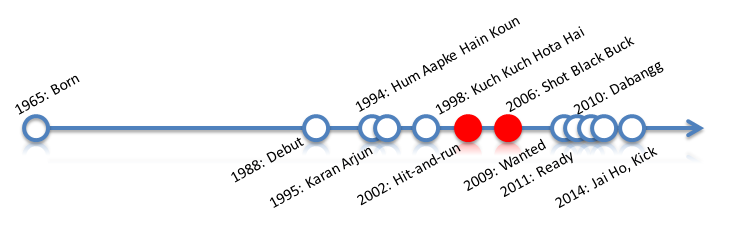
Below is a timeline which represents the farcical nature of judicial proceedings against Salman Khan. To put things in perspective, Salman Khan released over five films while the court was trying to finalize the charges against him. He went on to release blockbuster after blockbuster, while the police officer who turned witness against him died a painful, ignominious death.

While these pronouncements break down our belief in systems meant to protect us, we must try to retain perspective and view this as a case about a hit-and-run involving a man called Salman Khan, rather than a superstar by that name.

Given the nature of the incident and historical precedents, we must first probe how countries around the world fare in similar cases. "Benchmarking" is a crucial step in identifying the strengths and shortcomings of any system, including the judiciary.

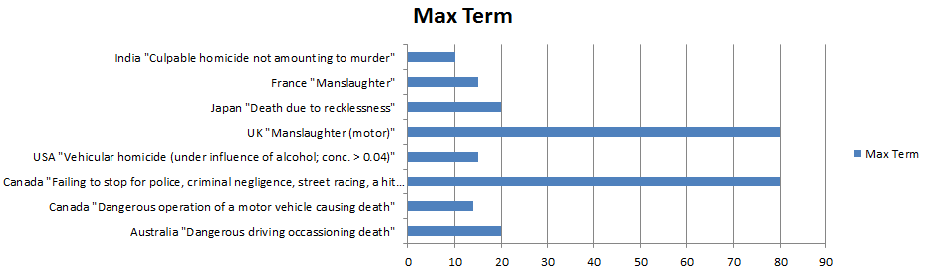
By evaluating the most common charges levied under similar circumstances in countries across the world - this is usually termed "Vehicular Manslaughter", "Motor Homicide", "Dangerous driving occasioning death" or (as in India) "Culpable homicide not amounting to murder" - we can qualitatively understand the nature of sentencing:

In terms of sentencing, it would seem that our books of law do not differ widely from worldwide standards. There are countries which are far more stringent with their laws, imposing sentences up to life imprisonment (e.g. Canada) in some circumstances, but there are a few with far less severe punishments for similar crimes.

It must however be noted that the swift justice is usually more important than an increase in possible sentencing. It does not make sense to give a life-term to a man in his seventies for a crime he committed in his forties. The arduous process of procuring justice in the country makes the judiciary something like a comedy-act.

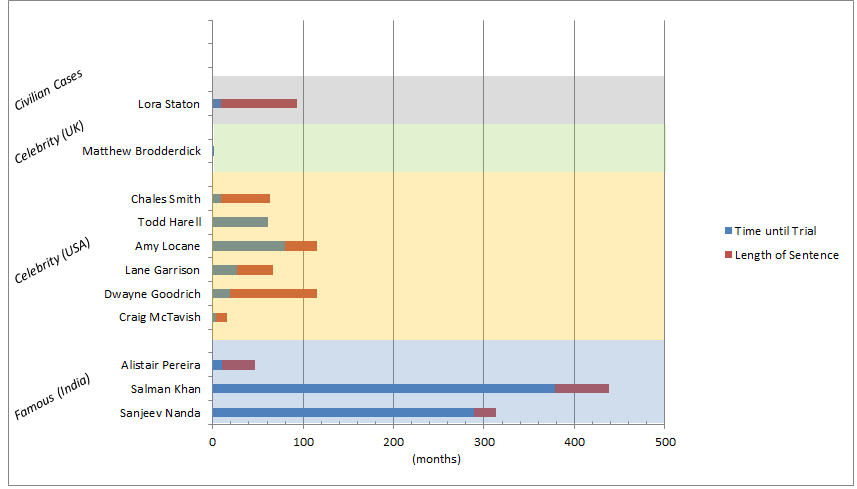
This is a comparison of the performances of various justice systems across the world in similar hit-and-run cases involving celebrities like actors, businessmen, NBA and NHL sports-stars, and relatives of the rich and powerful. While the term itself is varied, justice is served piping-hot in a way which makes slightly more sense than the great Indian comedy show.

Craig MacTavish and Charles Smith, who were NHL and NBA starts respectively, got their sentences in less than eight months. Matthew Brodderdick , the voice of adult Simba in Lion King, was dished out (a travesty of) justice in just about one month. In comparison, Sanjeev Nanda of the Delhi hit-and-run case was sentenced to two years imprisonment in 2008, ten years after his crime. He killed six persons including three police officers.

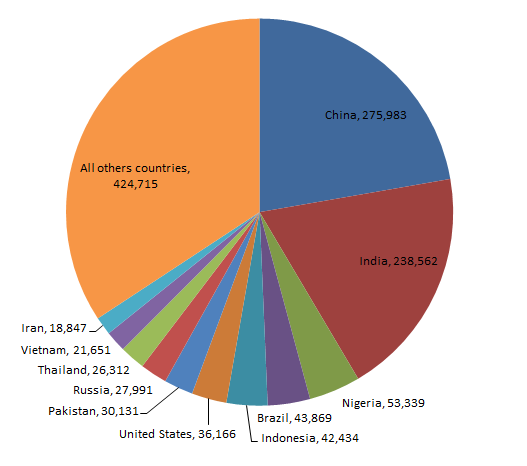
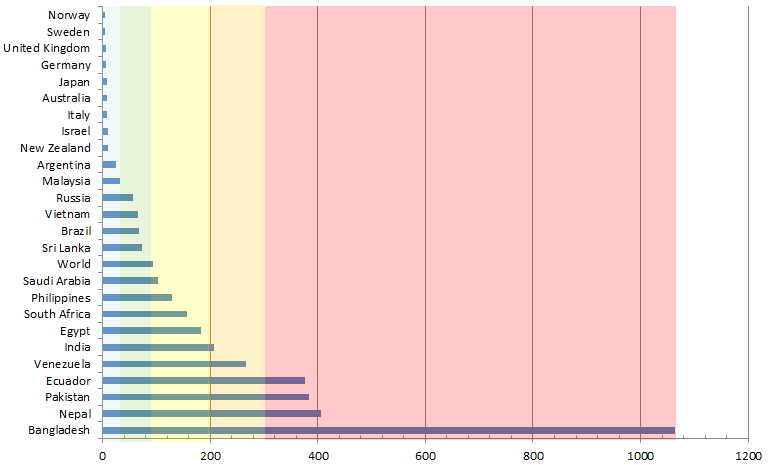
The rate at which vehicular death cases are registered (this doesn't cover cases which are not reported) amplifies these extreme shortcomings of the judiciary and the bodies involved in investigation. India contributes an alarming 19% of the world's total automotive fatalities, second only to China.

While the deaths are in proportion with the overall population of the countries, a more relevant statistic is the "Automotive Fatalities per 1,00,000 motor vehicles" - in which India has more than twice the world's average.

The weaknesses of the judiciary are showcased by the accelerated accident rate (of which a percentage is taken to court). Cases come in, pile up and collect dust upon the shelf, while few actually leave the court. Simultaneously, the kinks in our law-and-order system result in enhanced accident rates, thereby exacerbating the situation. In the absence of deterrent punishment, the value of safe-driving is often compromised. And there are more accidents.

Simple concepts of lane-discipline and obeying traffic lights are forgotten, overspeeding is hardly seen as an offence, and most people drive after taking one for the road. Only yesterday, I watched a group of drunk bachelors getting into the car discussing Salman Khan's case,  oblivious to the irony of the situation.

"Thappad se darr nahin lagta hai sa'ab. Car se lagta hai."

Quick and effective justice will be possible only when the judiciary, like most modern institutions, has metrics to measure efficiency, and specific and measurable targets to show constant improvement. In the absence of these, or with the poor enforcement of these, the men in black cloaks will remain an ineffective pool of mediocrity, and Salman Khan will make ten more blockbusters before his sentencing is enforced.

““Everyone strives to reach the Law,” says the man, “so how does it happen that for all these many years no one but myself has ever begged for admittance?”
The doorkeeper recognizes that the man has reached his end, and to let his failing senses catch the words, roars in his ear: “No one else could ever be admitted here, since this gate was made only for you. I am now going to shut it.””
— "Before the Law", Franz Kafka


A Tambrahm's tryst with Atheism

It all started a few months ago, when God died.

Camel

I was brought up in a typical Tamil Brahmin household. I woke up to the melody of Venkateshwara Suprabhatham and to the smell of Cycle brand agarbathies, and sometimes to the sound of bells interrupted only by the rustling of the pages of The Hindu. On auspicious days, the bell in the nearby temple would be rung some two thousand times. I was taught to wake up and look into my palms, and say an ancient prayer invoking Lakshmi, Saraswati and Govinda.

My upanayanam - the initiation ceremony - happened when I was thirteen. Ever since that day, even though the frequency of Sandhyavandhanam rapidly fell from thrice a day to zero, I have worn my poonal every minute of the day, every day of the year. I found peace in temples and other such places of belief. I didn't believe in God in a particular form, but I believed in the eternal being. Long after I left the house of my parents, I continued to pray, light the lamp and apply prayer ash on my forehead.

I have tried to remain unselfish in my prayers - asking for love, mercy, wisdom and peace for the entire world. When I entered temples, I would extinguish every incantation in my armory before proceeding to ask Him for rewards. I was almost always ashamed of asking; it trivialized the act of praying. But I always asked, and often traded things I had for things I wanted. It used to work.

One fine day, everything changed. In my mind, God died.

* * * * * * * * * * * * * * * *

Lion

In a moment of madness and revelation, it all fell apart. The firmament was ripped open, drenching my world in blood. God, from an unquestionable truth, became an abstract entity. I could no longer be sure of anything; the ground beneath my feet yielded. I fell.

The myths were no longer accounts of God's greatness. I could no longer imagine them as exaggerated versions of truth. They were as false as my poems. Time had put them on a pedestal! A false height, from where they were told to us repeatedly, until we no longer listened to them for their beauty or their nuances. They were absolute.

But now, the layers began to peel off. The Ramayana - probably our most fragile tale - was unsurprisingly the first to break. Slowly though, in quick succession, every story bit the dust. Nothing was sacred. Not only did the stories stop relating to God, their final morals disappeared. Truth was wrecked. And fact didn't exist. I was thrust into an eternal nothingness.

Without a guiding force, I began to question every action and every result. It is easier to believe in a God who doesn't play dice than in the conceited theory that our world is an orderly speck of dust in a chaotic, meaningless universe. Day after day, I asked stupider, and therefore wiser, questions, none of which had answers.

My world imploded when everything associated with myth and belief also yielded - classical music, painting and sculptures, traditional clothes and languages. We have stored eons of history in our cultural and religious fabric. And now, it was impossible to dismiss only one of these attributes - you cannot extract God from songs and literature. Along with God, my world was dying.

In the absence of heavenly rules, life was easier and harder. There were new freedoms. And unkind responsibilities. In the past, I have always prayed in misery and in gloom. When God doesn't exist, can you still pray? I did not discard the threads on my body, but I renounced God, and severed the umbilicus. In the absence of rules, you must make them. Alone and empowered, I ventured into this challenging world where no one was accountable, where there was no fate, where there was no control. Everything was hanging by a withering thread which wouldn't entirely break.

I was alone and free.

* * * * * * * * * * * * * * * *

Child

A few days ago, I went to the temple again. I found myself at its doorstep quite unintentionally, and if I had retained my earlier beliefs, I'd have termed it Destiny. Even in the brighter confines of this modern temple, there was peace. A beautiful silence enveloped me. I paused to think. And then, thinking paused.

The very same confines which stir some men to murder and violence blessed me. I wanted to believe that God wasn't dead. I wanted to talk to Him and to myself. I didn't have anything to ask, but I wanted to offer my belief.

I am convinced that humans need to believe in order to live, if not in God then in something or someone else. But true belief doesn't require you to hold on, because a satisfying peace is never insecure.

I could sit on a rock in the middle of the sea, or perch myself upon on a jagged rock jutting into the infinite sky, or gaze into a crackling crimson flame or watch the night sky with its billion stars. These, for me, are moments of God.

That day, the temple - because of its peace or its cool grey stone, or simply because of its familiarity - brought me closer to this exalted state. For the first time, in the stone, I could see His presence and His absence. In such a moment, I realized that my beliefs would disagree with everyone who has contemplated on the subject. But I knew that my beliefs would not exist if others stopped contemplating.

Just as belief in God is a compartmentalized thought, disbelief is also. Only the simultaneous existence of both possibilities encompasses the whole. Tolerance stems from the whole.

There is now contentment and ambition, peace and passion, earth and heaven.