Last Night's Story

Monday happened.

Morning coffee rushed down my throat, my blue BMW X1 rushed me to office. I toyed with the iPhone in the backseat as Dharmender negotiated four-wheeled mindlessness. We passed the vast dusty fields, and massive concrete towers entered my view, for perhaps the thousandth time.

9.32 am: Hundreds of people were entering the many towers of India’s new-found middle-class prosperity. I smoothed my sleeve, and leapt out of the car, into their midst. Sharp-dressed men and beautiful women held my attention as we marched towards the elevators which would take us to our many offices, on some twenty-five different floors.
I stood in the elevator glancing at my watch, with last night’s half-written story still running in my head. We all glanced at our phones, and watches, and iPads, and shook our heads, and clicked our tongues. We were all late. 8. 9. 10. 11. 12. 14. 15... Once again, the silliness of not having a thirteenth floor registered on my mind, but I no longer found it funny – not after all these years. With a tinge of regret, I realized I could now recognize faces in the elevator, and possibly identify the companies for which they worked.

At each floor, short tempered people – high on caffeine – stumbled out of the elevator in a zombie-like trance, until at last, it was my turn. I took my mind off my protagonist, and focused on the world that surrounded me. I paced towards the swinging glass door and checked-in with my access key card.

“Good morning sir,” said the guard, standing up as I entered. The peons next to him rose from their seats as well.

As I approached my cabin, I was greeted with more smiles, and familiar ‘what’s up’s. I placed my laptop in the docking station, turned on the extended screen, called the cafeteria and drowned myself in coffee and emails. I answered a few calls, and expressed my displeasure at a report’s shoddy presentation.

I then picked up my diary and walked into my manager’s office. “Why are these sales figures dropping?” he asked me, pointing at an info-graphic. He was a heavily built man, whose life revolved around his job. In his worldview, his happiness was directly dependent on how content his manager was. By logical extension, he didn’t expect me to be happy unless he was satisfied. I wondered how the hero of my incomplete story would react in such a scenario.

There were a few more questions about meeting Q3 revenue targets and possible avenues to expand market-share. I had all the numbers at my fingertips, and threw them at him as soon as I knew where he was heading. The Q&A session resulted in nausea: as I exited the room, my head felt empty. I hadn’t felt this way since college, when I would load my brain with answers to questions which I knew would come up in tests, and flush my brain out completely during the exam, leaving nothing behind.

I went back to my cabin and took stock of everything. I thought of my origins and my rise through the ranks; I evaluated the coming years and looked at my seven figure Savings balance on Citi’s Internet Banking site. I then thought about the life which really awaited me. At that moment, last night’s story completed itself.

I needed to quit.

The nagging feeling had finally given itself dangerous form. I couldn't run away any more. This wasn't a random impulse; seven months of thought, debate and unresolved emotions had crystallized into an overpowering decision. There was, now, no turning back.

Opening the drawer, I pulled out the sheet I printed many weeks ago and scribbled my name on the dotted line.

I knocked on my manager's door again. He was just getting off the phone. "I'll call you later, darling," he was saying, as he took the phone off his ear.

"Have a seat," he told me.

"I'm not sure if this will come as a surprise to you," I said, taking a seat, "but I'd like to quit."

"What? Why?" he said, with his old, half-serious grin.

"I'm taking up writing. Much more seriously."

"You've written before, haven't you? Why quit when they can coexist?"

"I'm not doing it justice. What's the point of a spent man trying to pen two pages at ten p.m. every evening, and falling asleep over the keyboard? And spending the next day thinking about what he could've written, only for the same thing to repeat?"

"Think about the life ahead of you, man," he said. "Is the road not clear enough? Do you even understand what you're leaving behind?"

"I know what I'm leaving. But I think it's high time I complete last night's story."

"You are leaving mansions and power, and millions, for a career in penniless art. What's the ending of last night's story?"

"This," I said, and handed him the paper.

*                      *                      *                      *                      *                      *
Friday Release: The Trial

“BEFORE THE LAW stands a doorkeeper on guard. To this doorkeeper there comes a man from the country and prays for admittance to the Law. But the doorkeeper says that he cannot grant admittance at the moment. ”
— "Before the Law", Franz Kafka

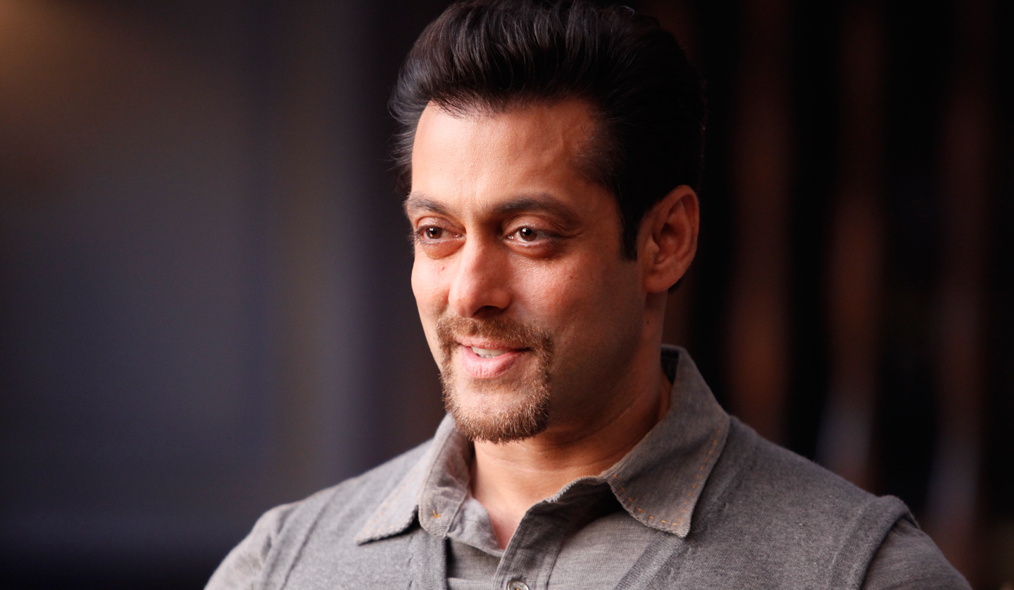
Yesterday, a superstar was set free by a court. A judgement which took thirteen years to come was suspended in under 48 hours. Now, the wheels of the judiciary will turn firmly and slowly, as they always have. Judgement will come, but when it is of little consequence.

The intricate system of checks and balances, which upholds the law and order, may well be independent of public opinion, political whims and individual fancy, but it is also unaccountable and hopelessly slow. In the meanwhile, a wronged homeless family, which has lost its sole breadwinner, languishes on the streets with hope that is slowly but surely being extinguished.

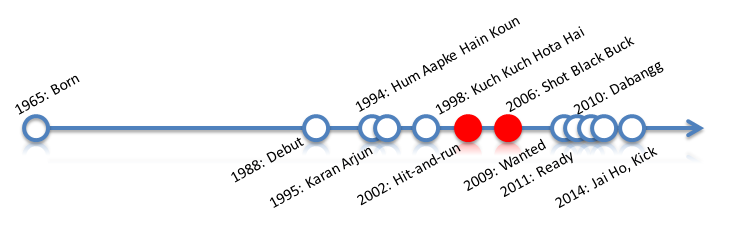
Below is a timeline which represents the farcical nature of judicial proceedings against Salman Khan. To put things in perspective, Salman Khan released over five films while the court was trying to finalize the charges against him. He went on to release blockbuster after blockbuster, while the police officer who turned witness against him died a painful, ignominious death.

While these pronouncements break down our belief in systems meant to protect us, we must try to retain perspective and view this as a case about a hit-and-run involving a man called Salman Khan, rather than a superstar by that name.

Given the nature of the incident and historical precedents, we must first probe how countries around the world fare in similar cases. "Benchmarking" is a crucial step in identifying the strengths and shortcomings of any system, including the judiciary.

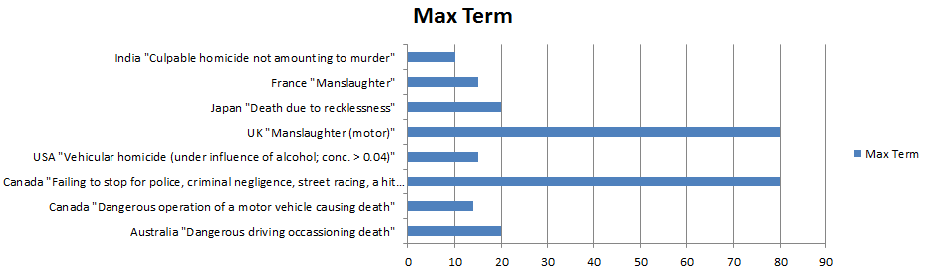
By evaluating the most common charges levied under similar circumstances in countries across the world - this is usually termed "Vehicular Manslaughter", "Motor Homicide", "Dangerous driving occasioning death" or (as in India) "Culpable homicide not amounting to murder" - we can qualitatively understand the nature of sentencing:

In terms of sentencing, it would seem that our books of law do not differ widely from worldwide standards. There are countries which are far more stringent with their laws, imposing sentences up to life imprisonment (e.g. Canada) in some circumstances, but there are a few with far less severe punishments for similar crimes.

It must however be noted that the swift justice is usually more important than an increase in possible sentencing. It does not make sense to give a life-term to a man in his seventies for a crime he committed in his forties. The arduous process of procuring justice in the country makes the judiciary something like a comedy-act.

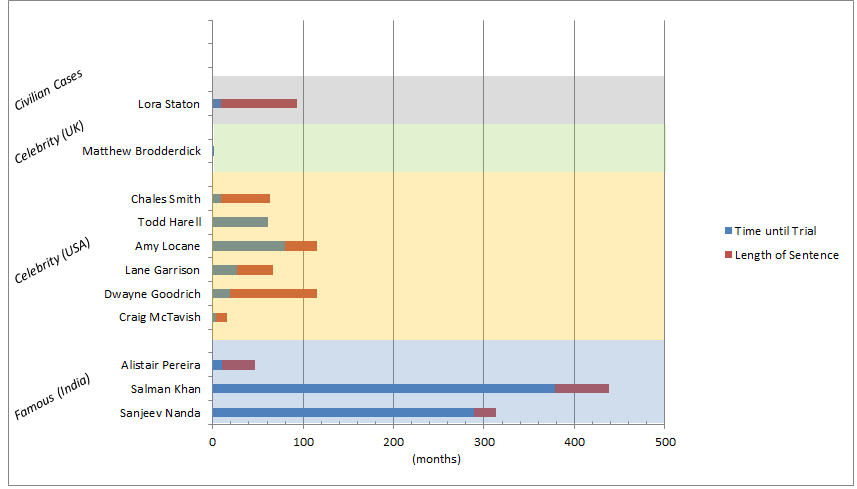
This is a comparison of the performances of various justice systems across the world in similar hit-and-run cases involving celebrities like actors, businessmen, NBA and NHL sports-stars, and relatives of the rich and powerful. While the term itself is varied, justice is served piping-hot in a way which makes slightly more sense than the great Indian comedy show.

Craig MacTavish and Charles Smith, who were NHL and NBA starts respectively, got their sentences in less than eight months. Matthew Brodderdick , the voice of adult Simba in Lion King, was dished out (a travesty of) justice in just about one month. In comparison, Sanjeev Nanda of the Delhi hit-and-run case was sentenced to two years imprisonment in 2008, ten years after his crime. He killed six persons including three police officers.

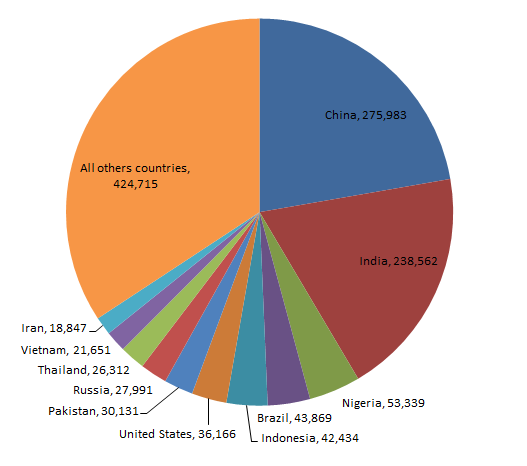
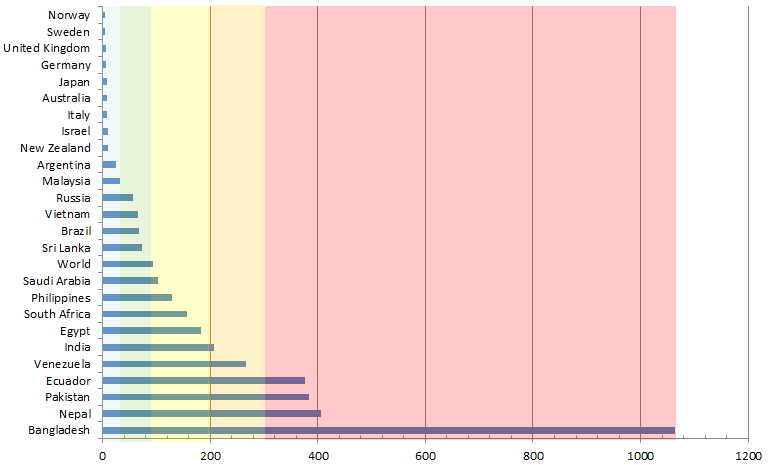
The rate at which vehicular death cases are registered (this doesn't cover cases which are not reported) amplifies these extreme shortcomings of the judiciary and the bodies involved in investigation. India contributes an alarming 19% of the world's total automotive fatalities, second only to China.

While the deaths are in proportion with the overall population of the countries, a more relevant statistic is the "Automotive Fatalities per 1,00,000 motor vehicles" - in which India has more than twice the world's average.

The weaknesses of the judiciary are showcased by the accelerated accident rate (of which a percentage is taken to court). Cases come in, pile up and collect dust upon the shelf, while few actually leave the court. Simultaneously, the kinks in our law-and-order system result in enhanced accident rates, thereby exacerbating the situation. In the absence of deterrent punishment, the value of safe-driving is often compromised. And there are more accidents.

Simple concepts of lane-discipline and obeying traffic lights are forgotten, overspeeding is hardly seen as an offence, and most people drive after taking one for the road. Only yesterday, I watched a group of drunk bachelors getting into the car discussing Salman Khan's case,  oblivious to the irony of the situation.

"Thappad se darr nahin lagta hai sa'ab. Car se lagta hai."

Quick and effective justice will be possible only when the judiciary, like most modern institutions, has metrics to measure efficiency, and specific and measurable targets to show constant improvement. In the absence of these, or with the poor enforcement of these, the men in black cloaks will remain an ineffective pool of mediocrity, and Salman Khan will make ten more blockbusters before his sentencing is enforced.

““Everyone strives to reach the Law,” says the man, “so how does it happen that for all these many years no one but myself has ever begged for admittance?”
The doorkeeper recognizes that the man has reached his end, and to let his failing senses catch the words, roars in his ear: “No one else could ever be admitted here, since this gate was made only for you. I am now going to shut it.””
— "Before the Law", Franz Kafka


Girl in the Metro Compartment

“Ting. Sikanderpur station.”

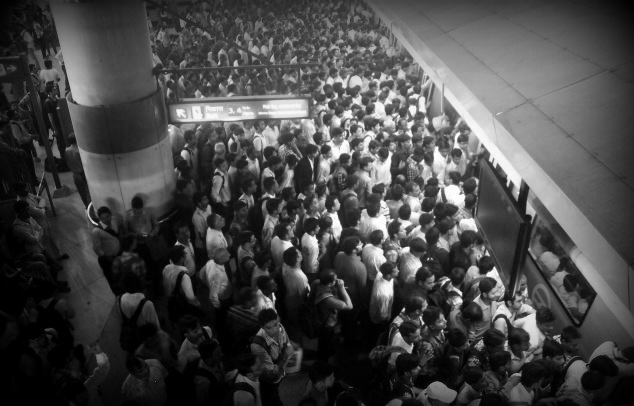
The sound of rollers, and the doors parted. Two elbows propelled me forward; my messenger bag left my side and I was flung headlong into the train compartment. People were caught at the door, still trying to leave, sandwiching me between immovable objects and an irresistible force.

I managed to pull my bag closer. A large bearded man turned sideways to give me space to plant both my feet. I watched a frail boy being squeezed against the backside of his father. There was still much jostling and swearing; like everywhere else in India, space was in acute scarcity.

“Ting-ting, ting-ting,” the doors began to close. Another man leapt through the gap and, with his momentum, fashioned a corner for himself just as the door shut behind him. Like a tin of atta, there was always space to accommodate more with enough impact. The rubbers pressed against each other and the train gently jumped into motion.

The man in a striped shirt, wearing Beats headphones, stumbled backwards and stepped on my foot. I pushed back on him. He turned and grunted, as if demanding an explanation. I looked away and tried to breathe.

The air smelt of wet armpits and stale cigarette smoke. An oddly shaped canvas bag which poked me in the midriff was the only thing that bothered me more. The train decelerated, throwing the collective mass of humanity in the direction of its motion. “Oh be’ncho” – a sardar drowned my own oath.

I realized, in that moment, the stark absence of femininity in the compartment. Sweating, swearing, testosterone-driven stereotypes. Women permeated the world only through Facebook and Whatsapp. I wasn’t sure if the wetness on my skin was my sweat or another’s. The train stopped.

“Ting. Guru Dronacharya station.”

The sound of rollers, and the doors parted. There was a massive readjustment. I hoped people would rush out of the compartment. Ten people entered instead. I held the pole tightly. “Idiots,” said the grey-haired uncle next to me, “live like cockroaches.”

I looked towards the door. In front of the exit stood a young woman, with her streaked curls tumbling onto her forehead.  Her black dress, which ended only a little over her knees, hugged her fragile body. Standing on bright red heels, she stared into the compartment. The compartment stared at her.

Stories of Delhi – no, of Gurgaon! – rushed through my head. I wondered why she would want to enter this world, instead of the first compartment marked pink with white flowers. Her right hand clasped the strap of her Hidesign bag. She held it tightly against her body, and stepped forth into our hell. The compartment breathed the outside air, and waited for her eagerly.

I thought I saw the old man next to me nod in apprehension. The two men nearest me barged into me, compressing me in the process; I dropped my shoulders, brought my feet together and became insignificant. Every man around me reacted the same way and transferred, to some extent, the lack of space to his immediate neighbours. I waited for someone to burst out in anger and frustration.

And then, I witnessed the most extraordinary scene. The lady walked in and turned her back towards the compartment. Two young fellows and a pudgy, middle-aged man formed a semi-circle around the lady, around half a foot in radius. Men backed away, giving her a whole foot of freedom in front of the sliding door. Every other man in the vicinity gave up a few inches to accommodate the lady – to ensure they stayed at a decent distance from her.

In a country known for rapes and crimes against women (in the rape-capital of that country), I could see how statistics could lie. This was a most brilliant and inconvenient depiction of the same culture which is being blamed for violence against women.

“Ting-ting, ting-ting,” and the doors closed.