Entrepreneurship #1: "You Are Now Free"

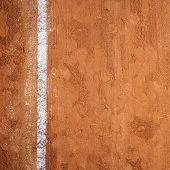
Like the average Indian, I too am built to endure. I am always crouching, in the ‘get set’ position, staring at a distant finish line, waiting for the gun to go bang. I always thought I was designed to function when the rules of the game are known, and the racetrack is clearly marked. Without those essential lines of chalk, I thought I might wander, dissipate and never come back.

Engineering was a godsend. Not only did I love science more than anything else in the world, I didn’t know about too many other things. The race was there to be run. I ran the damn thing. I suppose I won.

Events and tasks have always lined up before me, as obvious paths, as challenges, as examinations, as results of random probability… Some tasks have been easy, others have been difficult; a few, I don’t even recall. But my mind used to perceive the universe as a constant source of inputs to which I, the dramatic protagonist, had to respond.

Let me explain this more clearly. When I am subjected to a tight, restrictive framework, I will accept and understand the rules before proceeding to derive the maximum possible benefit from this environment. But I will constantly fall back on a story about rebellion - rebellion against the system, a fight against oppression. Struggle, therefore, becomes a crutch. Like many other people, I thrive in a hostile habitat that creates sufficient trouble to keep its people occupied.

The world of young entrepreneurs is different. As a first-time entrepreneur, most people are confronted with the delusion of control. In the start-up world, where “I work for myself”, there is a strange idea that the entrepreneur is not the response, but the stimulus. As there is no existing race to be won, a brand new race is created – first in the mind and then in the physical world. In a strange way, I now feel like I am the racetrack, the finish line, the runner and the gun.

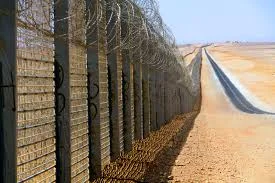
This is obviously a stupid notion. But it is also an energizing belief. In some ways, the entrepreneur is a child. In this world, there are no rules; there is freedom, and nothing else. But what is freedom in the absence of its boundaries? Such ‘pure’ freedom creates a world where the story of struggle can no longer be an effective crutch. It creates a delusional place where you can become anyone.

In the past few months, I have passed through a mirror. Everything here is fresh and laterally inverted.
Help in the Time of Rainfall

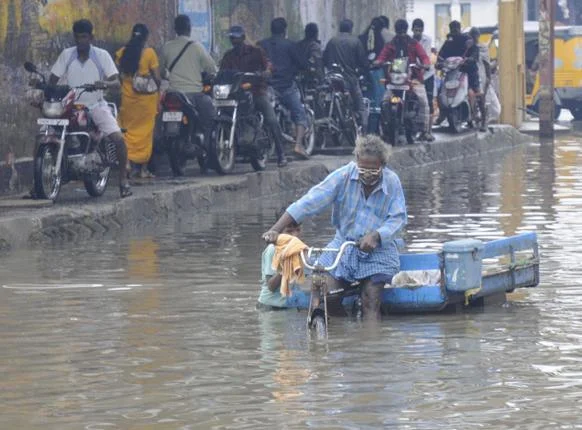
Raindrops, little bullets that explode upon impact, fell upon the city, turning every trough in the road into a bucket. Low-lying homes were flooded. People were on terraces, hailing boats, choppers and their able-bodied neighbours. Their food supply was affected. They had no access to water.

I had no access to the internet. I didn’t know how long my inverter would work. I used my mother’s internet ration to connect with people I consider friends. I also connected with strangers on the internet, united by a wave of empathy and concern. The internet is a beautiful place to call out for help, and to offer assistance.

The rains didn’t cause floods near my house. They created immense pools of stagnant water at street corners, just high enough to drown the car-exhaust and ensure the audacious driver floated to a halt in the middle of the road. As calamities go, this was highly unspectacular. The rains, however, disabled the power station, telecommunication towers and shops in general: there was little tap-water (water was still available from wells and hand-pumps), electricity and internet. So the rains that weren’t life-threatening by any standard became a mirror in which people were confronted by their dissatisfied first-world images.

It was a frustrating evening. I was feeling bored, unproductive and particularly useless. As I was craving for internet-access, I took control of my mother’s phone – the only one which could connect to the web. Turning to Twitter, mistaking it for panacea, I said within 140 characters – “Anyone in Adyar/Besant Nagar who wants help – food, shelter, assistance – call me at 24912062 #chennairains”. As a mode to find purpose in life, the internet offers instant gratification: I was retweeted several times, and my chest swelled with pride and satisfaction.

Ten minutes later, I recognized the futility of my action as the BSNL line was dead. As my tweet was winning over the world, I was cut off from everyone else in the darkness of my bedroom. I was left feeling humiliated and bored. Certain that I didn’t have a shot at both triumph and suffering, I felt a familiar lurch: I should do something.

So I took the scooter keys, unlocked the vehicle and sped out in the mild drizzle. My head was swelling with goodness, and the possibility of noble actions that could help several families. This gladiatorial sensation lasted until I reached the gate, where the watchman asked me, “Where are you going?”

Floundering for an answer, as I clearly didn’t know where I was going, I explained to him: “Udhavi seiya poren.” (I am going to help.)

“Yaaruku udhavi?” (Help whom?)

Like the Sun News reporter, I said with conviction: “Baadhikka patta makkalukku.” (The afflicted masses.)

Naturally, my watchman was stunned by my insipid reasoning, although, I am certain, he didn’t have an idea about the troubles in my mind. He followed up with a kind face one normally reserves for children and victims: “Where are the afflicted masses?”

“I was hoping you will tell me,” I said. “Where are the people who are suffering? I will go by the Adyar river. I am sure people are suffering there.”

“No, no,” he said. “You don’t know anything. People have been rescued near the Adyar river. They are all safe. You cannot help anyone if you go there.”

“Then where must I go?” I said, perturbed.

“You must go to Saidapet, or Kotturpuram. I hear there is severe flooding there. Water is very deep. And they don’t have food.”

“So I will go to Kotturpuram!”

He studied me for a moment, and adjusted his umbrella. “How will you go there?” he asked. I revved up the vehicle in response. My headlights were on; I was ready.

He pointed at the road and said: “When you take a left here, and go 200 metres, you will find that the road is flooded. Two feet water. Your scooter will not go.”

As rain streaked down my glasses, my heart still throbbed with determination. My desire to help was, however, logistically challenged. How will I go? I didn’t want to lose the scooter in a    puddle. And I still didn’t know how to help people.

“Can I not help people then?” I asked the watchman.

“I’m sorry, sir,” he said. “You cannot. Please go back home.”

World Peace 101

EXTENT

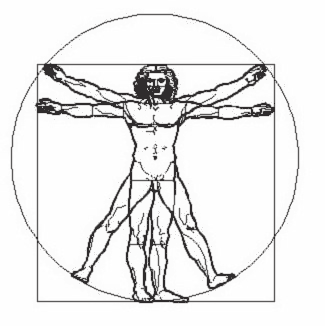
If the extent of the human being – not only in terms of physical dimensions, but also in philosophical scope – is determined and agreed-upon, the world’s problems will no longer exist. The loose definition of the individual’s jurisdiction, open to interpretation and debate, splits us into liberals and conservatives, jihadis and atheists, capitalists and socialists, cow-protectors and beef-eaters, haves and have-nots.

All issues are first fought in the mind, and then in the physical world. Laws govern what we, as individuals, are allowed to control and what we aren't. Citizens who have problems with existing laws campaign for reforms - this is the constitutional route - or work outside the purview of the law. What the individual perceives as his or her jurisdiction ultimately shapes all major debates in the world today.

The niche Western twin-solutions – liberalism and individualism – oversimplify the debate, but give us the most conventionally accepted definition of the individual’s jurisdiction.

OWNERSHIP

If it is agreed that the human being extends from the toes up to the head, and from the back up to the tips of the fingers, then rights and duties can be determined for this definition of the individual. Laws can be tailored to suit this requirement; any violation of the human body could then be termed a crime. If you get mugged at the street-corner, your personal space has been violated; this is a crime. Similarly, rape is a crime as it is forcible encroachment of personal space. Murder is then the highest crime possible under this system, as it deprives the body of life itself.

The individual’s limit can be extended, with some difficulty, to human-possessions as well. This would then cover issues such as theft, arson and cross-border infiltration. The complications in this extrapolation arise out of the concept of shared ownership. Does a house belong to the tenant or the owner? Do you – the owner – have a right to determine who is and who isn’t allowed into the house? Is it reasonable to enforce a No Smoking policy in the house, even though you – the owner – don’t currently live there? If you are a vegetarian opposed to animal slaughter, is it reasonable to ask your tenant to refrain from cooking meat in the kitchen?

Marriage can be seen as a contract wherein two individuals devolve certain strictly private rights in order to gain other rights over each other. Again, we ask ourselves: “Where do I end? Where do you begin?” We struggle to define these boundaries with children as well, because they are inseparable from the parents. Is it a good thing if a child is being forced to do his or her homework? At what age do we start respecting the child’s liberty? This is only the tip of a vast grey-zone, which even individualism and liberalism – which have worked well so far – struggle to pierce.

COMMUNITY

Drawing the boundaries with greater precision or defining rules with firmer bases do not help in tackling this grey jurisdiction. No matter how well you draw these lines, there will always be conflict. There will be conflict even if everybody agrees with a common definition of the limits of a human being.

Because an individual is created by a community, and a community, in turn, is created by a cluster of individuals, it is impossible to separate them from one-another. The society as a whole often carries powerful opinions, and these deserve certain respect. A blind shift towards individuality disrupts a system of shared communal-values. The individual's struggle against societal values must be acknowledged; it must not be opposed. But it also should not be glorified.

““I disapprove of what you say, but I will defend to the death your right to say it”.”
— "The Friends of Voltaire", Evelyn Beatrice Hall [1906]

IDEAS

In the light of Charlie Hebdo and the rise of Islamism, it has often been said that people have rights, but ideas do not have rights. Saying this repeatedly does not bring us any closer to a planet where this is true. Much has been said about the contagious nature of ideas, how they are bulletproof, how they cannot be destroyed by bombs and bullets… All these sayings are, interestingly, said about ideas which are considered positive. They are nevertheless true for all kinds of ideas. Shooting Parisians does destroy the idea of liberté-égalité-fraternité.  Similarly, bombing ISIS does not destroy the idea of a Caliphate.

The earlier quote (by Evelyn Beatrice Hall) about the Freedom of Speech and Expression is an important step towards liberty, but it takes a myopic view of society. In fact, it fails to consider the Idea as a serious force - more serious, perhaps, than the individual. This is because the idea does not ever exist alone, independent of actions and feelings. By denying the idea certain intrinsic rights, and by simply disapproving it and letting it be, we only create a more confusing, agitated world.

Ideas are shared possessions of humanity. The concepts we use to deal with them are far too limited in their scope, and thus yield statements such as “ideas do not have rights”. Of course, ideas have rights! The moment such a statement is made, it becomes true. We can choose not to acknowledge them, at our own peril.

Ideas usually lie in this grey-zone; they are neither mine nor yours. Yet, we expect one of them to be more correct than the other. Terrorism is an idea, counter-terrorism is another. Capitalism is an idea, communism is another. Science is an idea, not-Science is another. One of these sides can gain temporary ground over another; that is all what such a victory will ever be: temporary.

CONFLICT

It does not matter how strongly you believe in Science or, for that matter, Allah. There will be another side that does not agree. At this point, we have a choice. First choice: we can draw idea-borders (we can disapprove of each other), march to the frontlines and train our weapons at people on the other side. This is what we have been historically doing. According to modern sensibility, ideological wars are wonderful as long as there is no physical violation of another’s space. Since ideas do not have rights, it is perfectly acceptable (and sometimes, glorified) to decimate them. This, however, does little to settle a conflict. This constant violation of the individual’s space – in a realm that is abstract, but very real – is left unacknowledged until a physical action takes place.

The other choice is to create a world of shared possessions. Everything belongs to everyone, with varying degrees of influence. Boundaries, if they must exist, need to be fluid. In such a world, ideas can be acknowledged. Dialogue will not mean debate. Different viewpoints will coexist; the urge to unite viewpoints will give way to the urge to understand differences.

Not only will we allow for the existence of foreign ideas, but we will also understand them. We will respect ideas for being what they are: ideas. “So you believe that God created our world over seven days? I think we evolved from a Spaghetti monster. What do you think about that?”

The definition of the individual needs to be extended and softened. The world could then be a better place.