On Writing

The Beginning

I started writing a long time ago; I don't remember when. The past, so often, gets crushed together making space for a massive present, until the difference between yesterday and today is as significant as that between 2010 and 2011. However, I remember I started writing fantasy.

My first story was an amalgamation of the Smurfs and the Mahabharata. Much later, after I read my first Potter book, the same work included a Hogwarts-esque world as well. In fact, for the best part of a year, I was hell-bent on improving J.K. Rowling's literature; it didn't live up to my expectations, and in a mad childish whim, I tried to do better. My protagonist - shamelessly given a European name 'Peter' and white skin - thus journeyed into a terrifying world through a nightmare.

Over time, I imagine my writing developed a slight flavour, as I experimented with Indian myth; most prominently with a Bheema-like figure called 'Veera'. What I read - mostly European and American fiction - still shaped my works strongly. I never completed any of these tales. They held my attention for a while, and during this period, I was devoted to them; then they slipped away.

The Steadfast Tin Soldier?

Ashwin's story began as a blog-post that became longer than anticipated. I promised myself it would end as a 10,000-word short-story; I later found it transforming into a novella, and finally into a 70,000-word novel. I never wished to publish the work. But when the story ended, leaving me friendless for a short while, I decided - why not?

'The Steadfast Tin Soldier?' is not as autobiographical as people say it is, but it isn't independent of its author. I put a considerable portion of myself into that book, and sold it to the market. At first, it felt strange that something as intensely personal as a story was being read by other people. Soon, like many others before me, I learned to distance myself from the tale. In a strange way, imagination shaped reality.

My first foray into a longer form of writing was thoroughly satisfying. I was happy inside that bubble of imagination, untroubled by the world outside. I could live the life of Ashwin - my protagonist - and struggle his struggles, but in a world created by me. So the struggles always had purpose; I found purpose through writing.

MR19

Here, I write about the book I never got published. Not yet, anyway. MR19 - which only my closest friends have read - is the story of a man who tries to understand the world as it changes. The story, a work in mythology and science-fiction, happens in the future - in a homogenized planet. I wrote MR19 in order to understand the world, to accept the changing zeitgeist. I found enlightenment in writing.

Writing is more about listening to a story, than about telling one. I imagine that I write better than I converse; that is only because, when I write, I am listening to the story alongside you. The story plays out with a mind of its own. I cannot begin to describe - this paradox is unintentional - the beauty of a scene unravelling itself to you for the first time.

Nobody Remembers Ram

I wrote my latest book in two months. I was possessed by the story; it did not let me sleep. I wrote from bed, at work, in the metro, at bars, in coffee-shops, when I was friends, when I was on a family-vacation, in trains, inside planes, while eating... I found peace in writing.

This is a story of a successful man who goes missing. People search for him. They discover a narrative of his experiences. By elevating the pleasures and torments of a fictional character, I have been able to placate my own self.

There is too much turbulence in the world outside. Frankly, I don't care much about people and places any more. Why should I be part of something I cannot control? Give me a paper and a pen.
Is India Hindu or Muslim?

Kumbalgarh, Rajasthan: This proud legacy of the Mewar Rajputs - once the stronghold of Maharana Pratap - earned its fame through conflict. The evil Mughal emperor attacked; the noble king defended his people from destruction. Rana Pratap protected his women and children from loot and rape. He perished in the course of this great struggle, but not before enshrining himself forever in Indian folklore.

Srinagar, Kashmir: Here, there is a majestic fort atop a lone hill popularly known as Hari Parbat. According to legend, the mountain is an oversized pebble which was thrown by Goddess Shakti to slay a demon who terrorised the people. Or so the Hindus tell you. According to the Muslims, there is no Hari Parbat; there is only Koh-e-Maran, and a fort that Akbar built.

Patna, Bihar: As India took on Pakistan in a high-octane clash in the 2011 World Cup - the match was happening in Mohali - an entire mohalla was draped in green with Pakistani crescents. People cheered when Sachin fell; they prayed for Misbah to take them home. Neither of those things happened. India won that game.

Ayodhya, Uttar Pradesh: People from all around the country were mobilised with minimal effort to destroy a historic mosque in Ram Janmabhoomi, so that Ram's empire of dharma could be reestablished. Thousands died; the place - even after being split in three parts - remains in dispute.

UNITY IN DIVERSITY

A man was killed for eating beef. The matter has been thoroughly minced by the Media. "India has become intolerant" under Narendra Modi, they say. News articles proclaim that saffron terror is on the rise. "We are a culture of diversity and debate" is our fall-back line. When all else fails, we will repeat this line, like a broken tape recorder, and hope to feel better.

It is untrue that our country is proud of its unity in diversity. That is a line written for fifth grade Social Sciences textbooks. We are a country of peace, but we don't know what diversity means. Since we didn't have to understand diversity all these years, it did not matter. We all lived in our comfortable little niches, interacting with people similar to us, never venturing too far from home.

Diversity necessitates the existence of dissent. One cannot be different if expected to conform to a majority; there will always be a majority, no matter how small the sample-space. There are as many Indias as there are stories in our country. Each narrative gives us a different picture, and each of these is as true (or as false) as the other.

Can Maharana Pratap be elevated to his Godlike status without vilifying the Mughals? Can we simultaneously celebrate Chhatrapati Shivaji and Aurangzeb? How can Ramjanmabhoomi coexist with Babri Masjid, when they debatably occupy the same spatial coordinates? We are often forced to choose narratives, and therefore forced to choose a particular India.

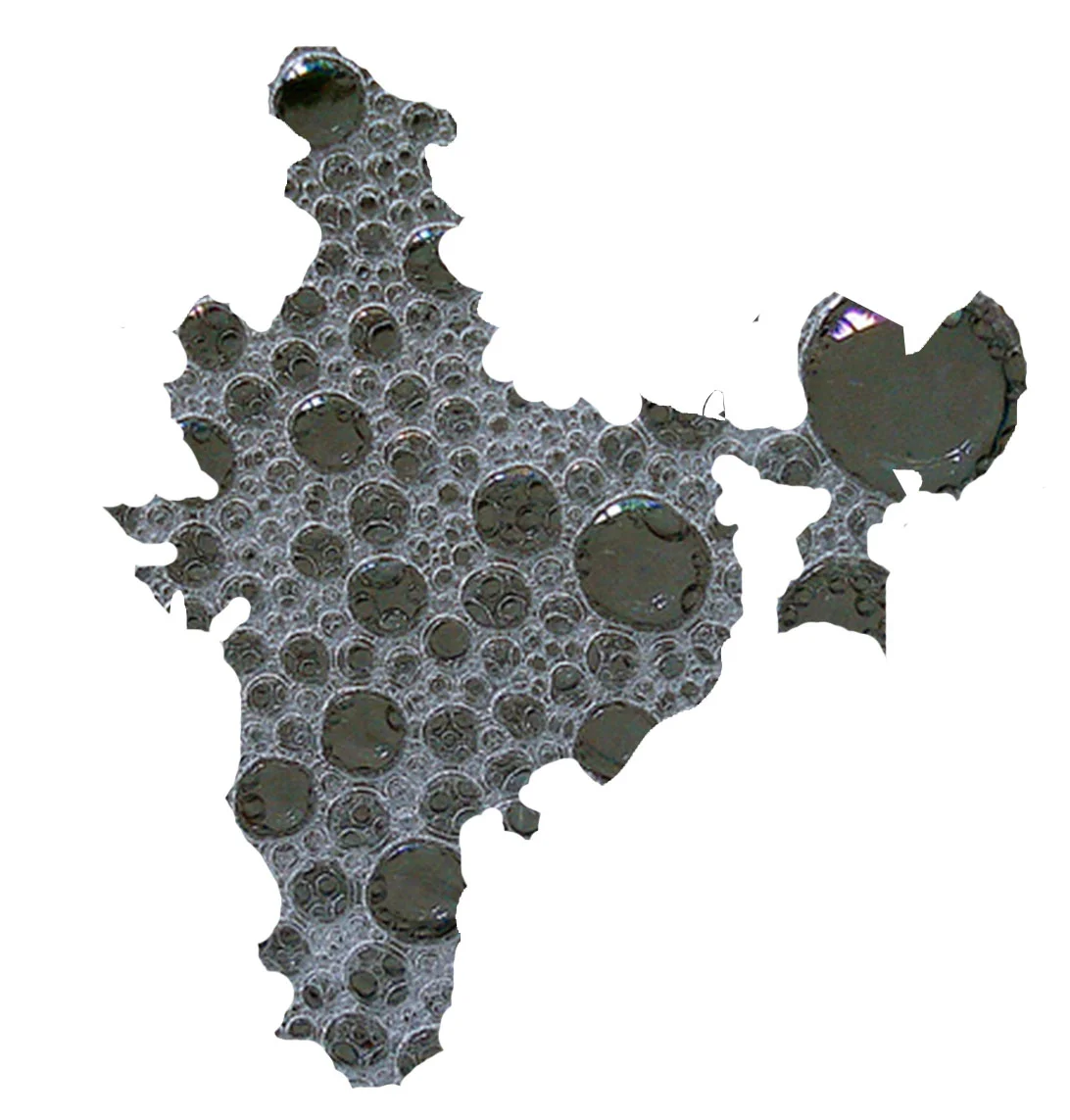
INDIA IS LIKE BUBBLES

We were, until recently, invisible to each other. We all had our little comfortable bubble, which encompassed our world. Everything we needed was within. Faced with globalisation - national integration is a small step in the grander scheme - we are forced to look outside our bubbles.

Of course, it doesn't please us. If it pleased us, we'd have ventured out a long time ago. Over time, some bubbles will coalesce and become super-bubbles. Super-bubbles will throw their weight around, for a while, until there are many such super-bubbles.

Ultimately, there is only one bubble, and that is the world. In my vision of such a mega-super-bubble, it is a place where people thrive on dissimilarities. Our ideas of liberals and conservatives are far too narrow to enter such a world. But I think we will get there.

Citations:

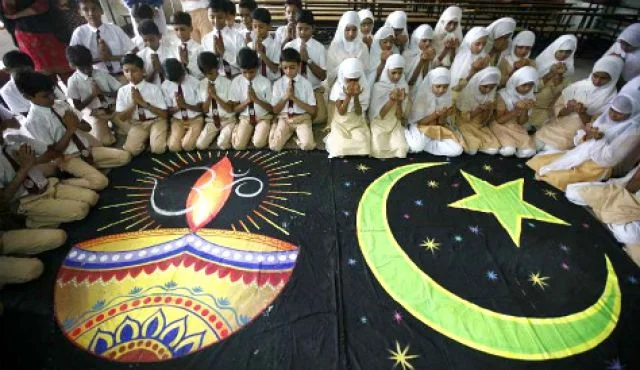
Picture of children praying for peace between Hindus and Muslims in India "http://www.haaretz.com/"

Men at Work

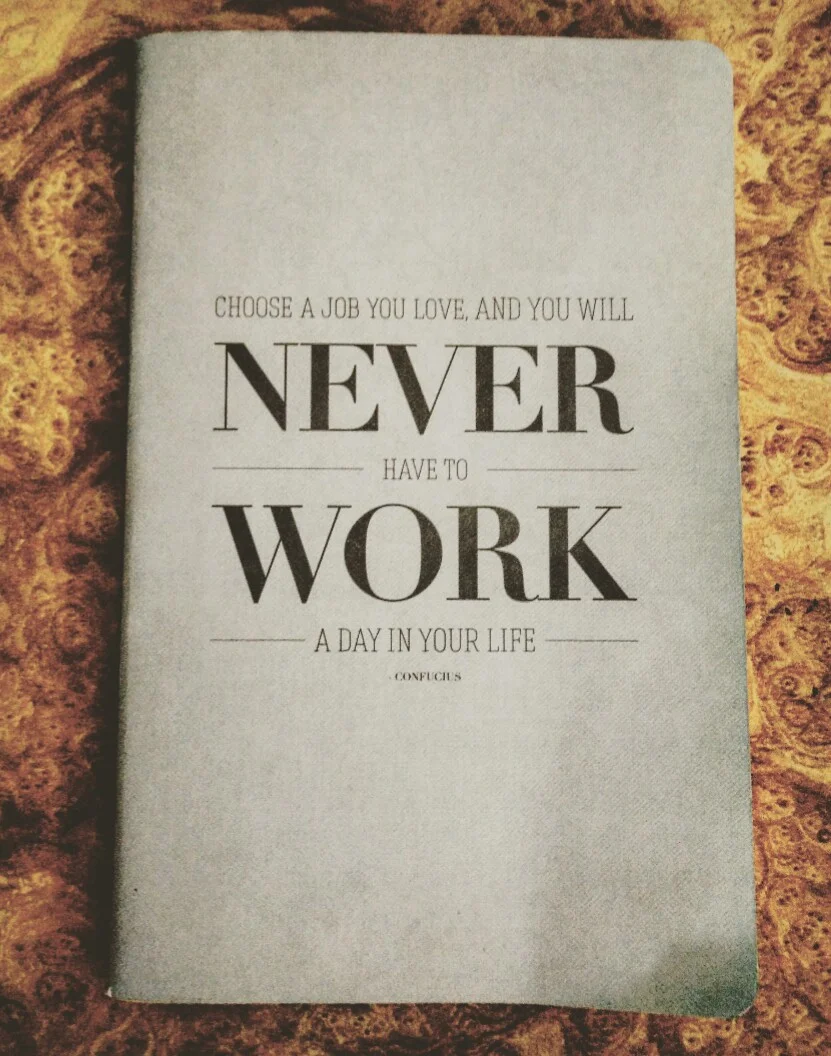
When I began this exciting new project - which I had no idea about at the time, my friends gifted me a notebook and a fountain pen. While fountain pens are delightful as long as you don't turn them into actual ink-fountains, it was the notebook that held my attention for the longest time. Its cover:

I'm writing again now, my third full-length novel. I'm starting a Sports-Tech company. (I will talk about these, in detail, some other time.) But both artistic and entrepreneurial pursuits have one thing in common: work-definition. There are, in fact, two reasons why you don't feel like it is work.

One popular understanding of 'work' is that it is something you don't enjoy very much - something you provide so as to earn a monthly salary. I think the notebook talks about this idea of work. By this definition, of course, you don't work when you're enjoying yourself.

The more interesting part about creative pursuits, however, is the idea of creating tasks. Nothing exists until you first put it there. And when you define tasks, you are not only defining inputs and processes, you are also trying to understand the possible outputs - how to measure it, do they follow a pattern, are they as expected, are they in line with inputs?

When I still had an engineering-management job, tasks had zeros and ones. There was a process to go from zero to one. When you finished a task, you marked it 'done'. As opposed to this, I now had a burgeoning number of unfinished tasks; I am not quite sure what is the beginning, what is the end. Discrete states - beginning and end - have been replaced by a slope; it goes on and on, perhaps to places I haven't even dreamed about.

I have an idea. I don't know how I will get there. I can only believe I will get there somehow. I can only be sure of my effort.